
Technical knowledge · technical report
Flash point, pour point and Noack volatility: reading them right
The last three lines of a data sheet are often skipped. How they are measured, how standards limit them and what they tell you.
Ung Vuong editorial teamPublished 15 Nov 202610 min read
Near the bottom of most data sheets sit , and sometimes . Each comes from a standard test and says something different - about storage safety, cold flow and oil loss when hot.
Flash point
The lowest temperature at which vapour above the liquid ignites briefly; the fire point is higher. Closed-cup results are usually about 5-10 °C lower than open-cup, so only compare values measured the same way.
| Method | Cup | Range |
|---|---|---|
| ASTM D92 / ISO 2592 | Open (Cleveland) | 79-400 °C |
| ASTM D93 / ISO 2719 | Closed (Pensky-Martens) | 40-370 °C |
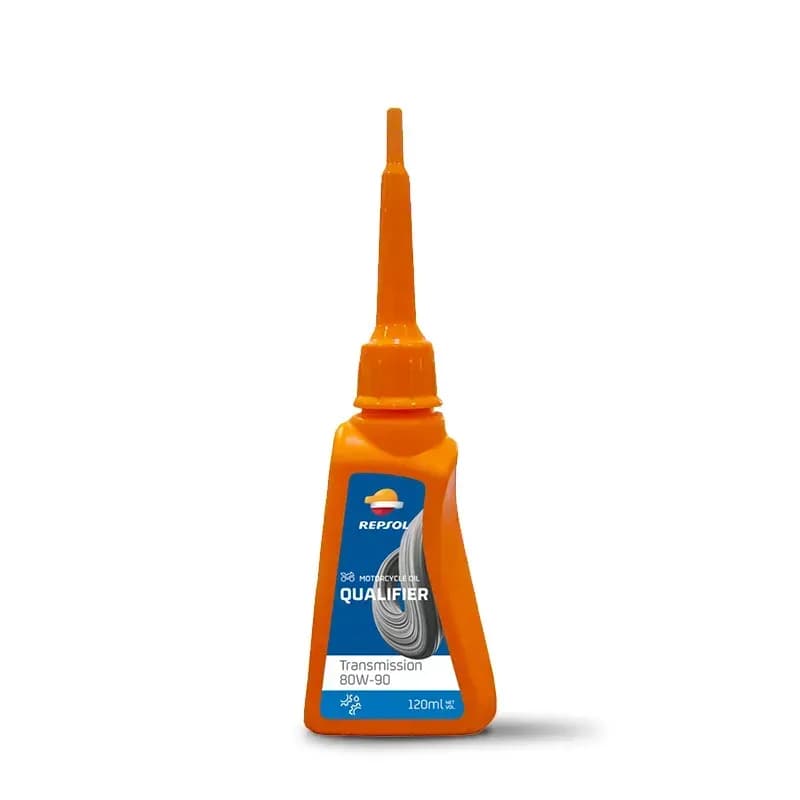
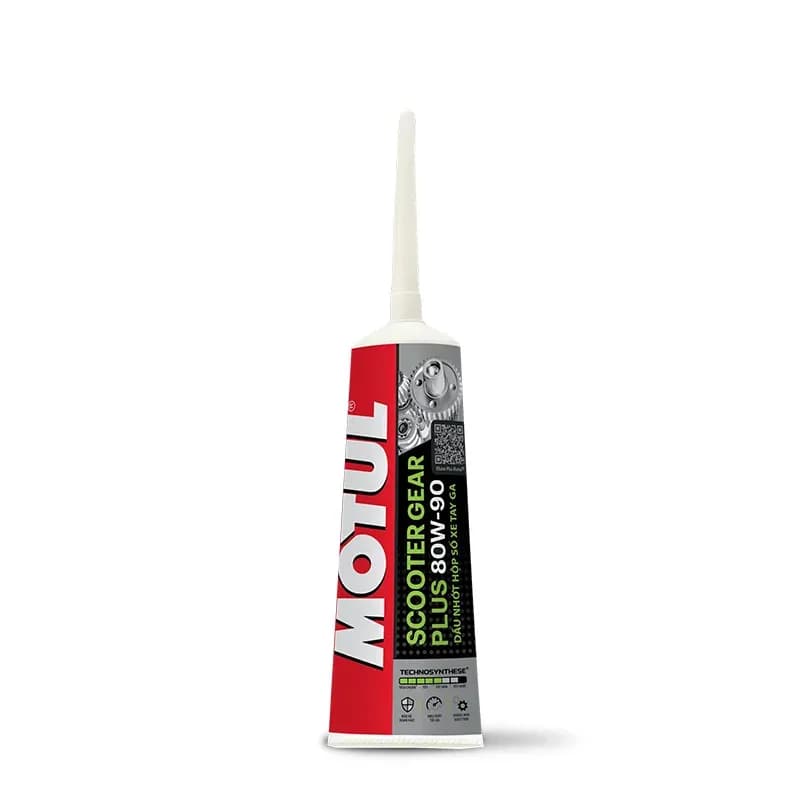
Repsol's Qualifier Transmission 80W-90 TDS (12/2025) lists 230 °C open cup; Motul Scooter Gear Plus 80W-90 lists 232 °C - typical values, not guarantees. In used diesel oil, a closed-cup drop of more than 20 °C from new suggests fuel dilution (Precision Lubrication).
Pour point and cloud point
ASTM D97 checks the sample every 3 °C; when it no longer moves within 5 seconds, 3 °C is added - which is why pour points read −21, −27 or −33 °C. Cloud point (ASTM D2500) is when wax first appears as a haze. Neither replaces the W rating for cold starts.
Noack volatility
Named after Karl Noack (1936): the oil is held at 250 °C for 60 minutes under airflow and the weight loss is reported (ASTM D5800, CEC L-40). Lower is better; evaporation contributes to oil consumption.
| Specification | Noack max |
|---|---|
| API SP-RC / ILSAC GF-6 | 15.0 % |
| ACEA 2023 A/B and C2, C3, C5, C6, C7 | 13 % |
| ACEA 2023 C4 | 11 % |
How to read them
- Check the test method.
- Typical values are not limits - the standard the oil claims sets the limits.
- For engine oils, Noack matters more than flash point.
- See reading a TDS.
References
- Wikipedia - Flash point
- OELCHECK - Flash point: comparison of different analysis methods (2022)
- Precision Lubrication - Flash Point Testing: A Comprehensive Guide (M. Williamson)
- ASTM D97-17b(2022) - Standard Test Method for Pour Point of Petroleum Products
- Wikipedia - Pour point (ASTM D97, D5949)
- Wikipedia - Cloud point (ASTM D2500)
- ASTM D5800 - Evaporation Loss of Lubricating Oils by the Noack Method (D5800-14e2; current D5800-21R26)
- Wikipedia - Noack volatility test
- Infineum - API Engine Oil Classifications, Crankcase Lubricant Specifications (2024)
- ACEA - Oil Sequences Light-duty engines 2023, Revision 0 (12/9/2023)
- ACEA - Oil Sequences Heavy-duty engines 2024, Revision 1 (12/2024)
- Lubes'n'Greases - ILSAC GF-7's arrival and a look at the tools used to deploy it (05/6/2025)
- Repsol - Qualifier Transmission 80W-90, Lubricant Technical File RP_9001L (12/2025)
- Motul - Scooter Gear Plus 80W-90, TDS (10/22)
- Repsol - RSGEAR EP4, TDS (07/2025)
Author
The content team of Ung Vuong Lubricants. Articles are compiled from brands' technical data sheets (TDS) and the SAE, API, ACEA and JASO standards; every article lists its references at the end.
For reference only - always check your vehicle manufacturer's handbook.
Products in this article
 Clutch & big bikesTDS
 ScootersTDS
 Cars
Read next
More articles


Try it
Open the SAE J300 bench
Pick a grade and see what each number means.