LONGFORM
The three lubrication regimes and the Stribeck curve, simply
Why engines wear most at start-up and why a thinner oil can still protect: the answer lies in a curve from 1902.
By: Ung Vuong editorial teamPublished 14 Nov 202613 min read
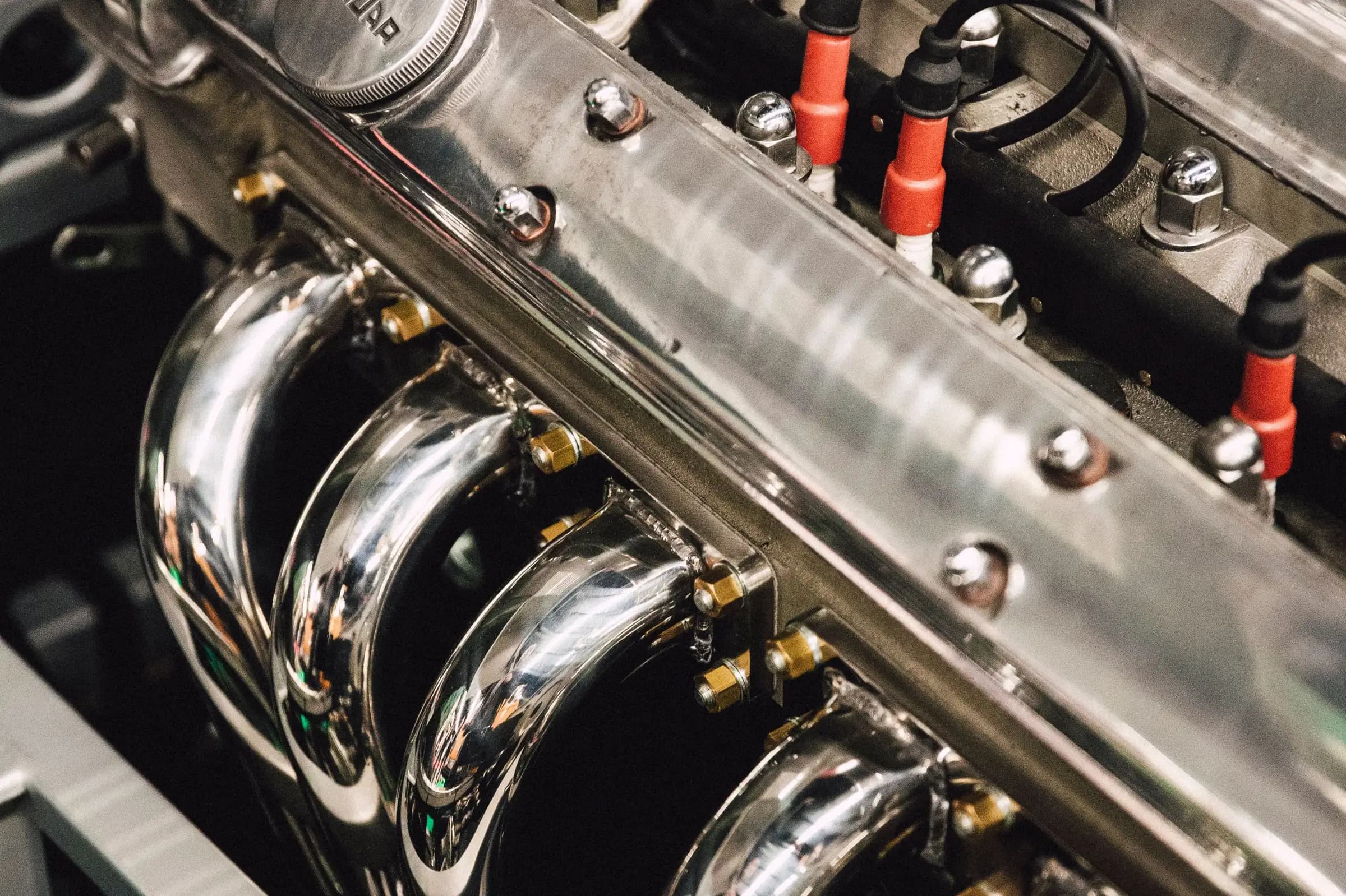
Under a microscope, a smooth crank journal is a landscape of tiny peaks called asperities. Oil's job is to keep the asperities of two surfaces apart - or, when they must touch, to let them touch as little as possible. How well it does that depends on three things: viscosity, sliding speed and load.
01
Who drew the curve
Richard Stribeck (1861-1950) presented his tests on plain and rolling bearings in Berlin on 5/12/1901 and published them in the VDI journal on 6/9/1902. In 1914 Mayo D. Hersey combined viscosity × speed ÷ load (η·N/P), now the usual x-axis of the Stribeck curve.
- 1901
Stribeck presents his bearing tests in Berlin.
- 1902
Published in the VDI journal on 6 September.
- 1914
Hersey proposes η·N/P for journal bearings.
02
Reading the curve
- Boundary: low speed, thin oil or high load - asperities carry the load and friction is high.
- Mixed: the load is shared between asperities and the oil film; friction falls quickly.
- Hydrodynamic: a full film separates the surfaces; friction rises again with speed and viscosity.
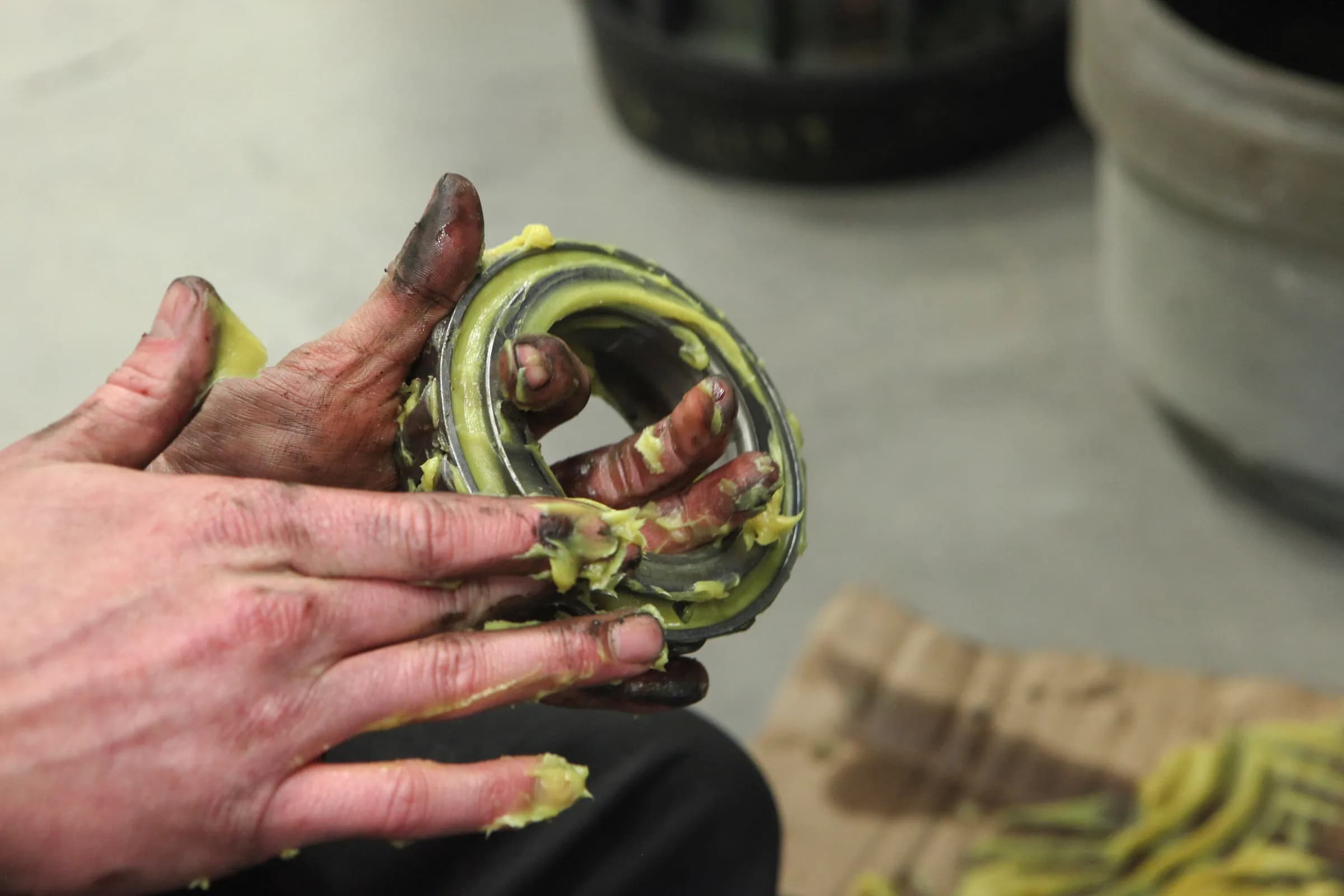
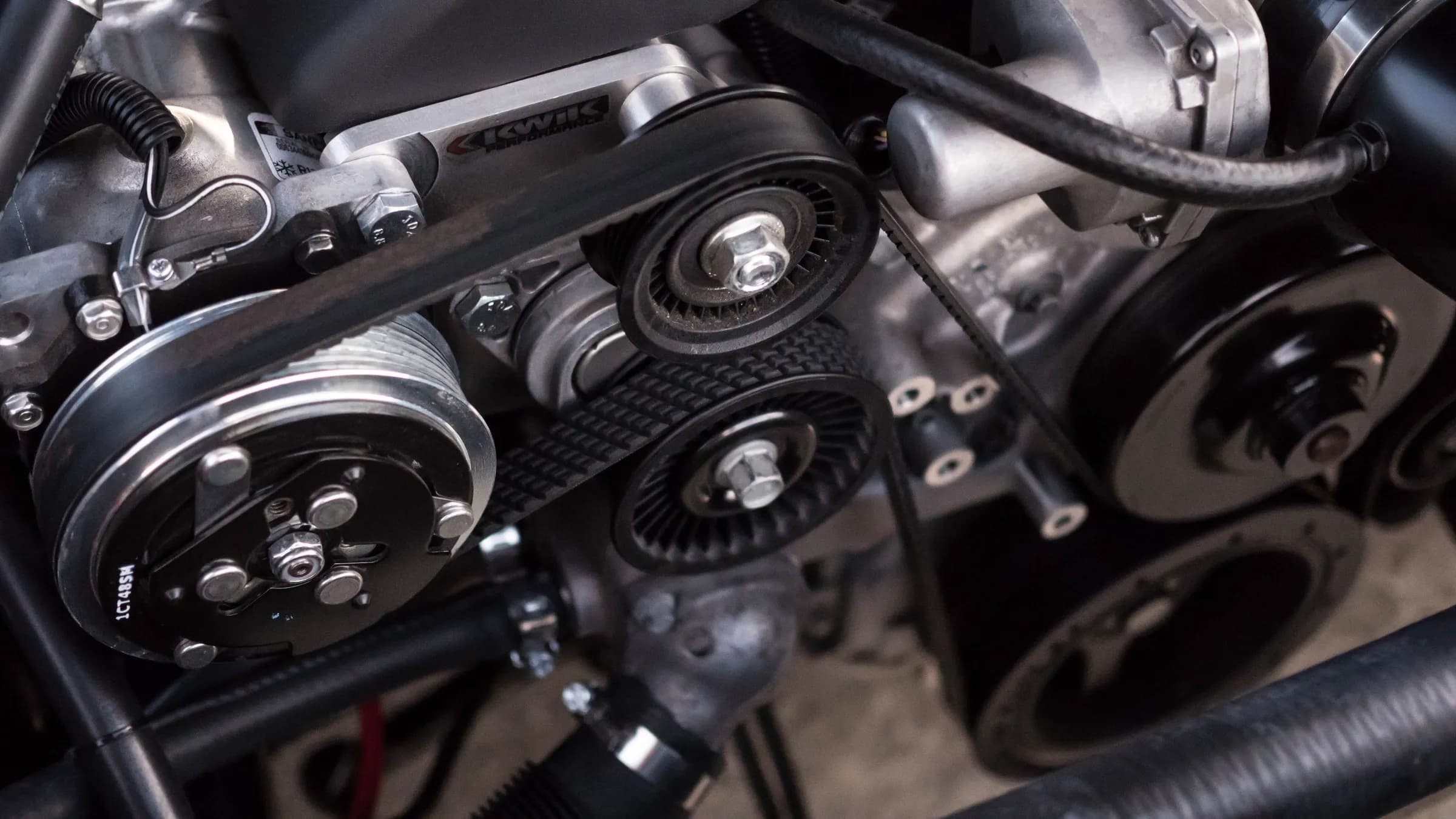
STLE's advice is to use the least viscous fluid that still fully separates the surfaces. Noria adds a fourth regime, elastohydrodynamic lubrication (EHL), for small, highly loaded contacts such as gear teeth and ball bearings.
Not the thickest oil - the thinnest oil that still keeps the surfaces apart.
03
Lambda and film thickness
Lambda (λ) is film thickness divided by combined surface roughness. Noria puts boundary lubrication below 1 and hydrodynamic usually above 2; other sources use slightly different bands, so treat them as guides rather than hard lines.
How thick is the film?
- hydrodynamic film in plain bearings
- 2-100 µmhydrodynamic film in plain bearings
- typical EHL film
- ~1 µmtypical EHL film
- EHD film in rolling bearings
- 0.1-2 µmEHD film in rolling bearings
- typical asperity height
- 0.4-0.8 µmtypical asperity height
Source: Machinery Lubrication; Reliability Solutions (30/7/2026)
04
Bearings versus gears
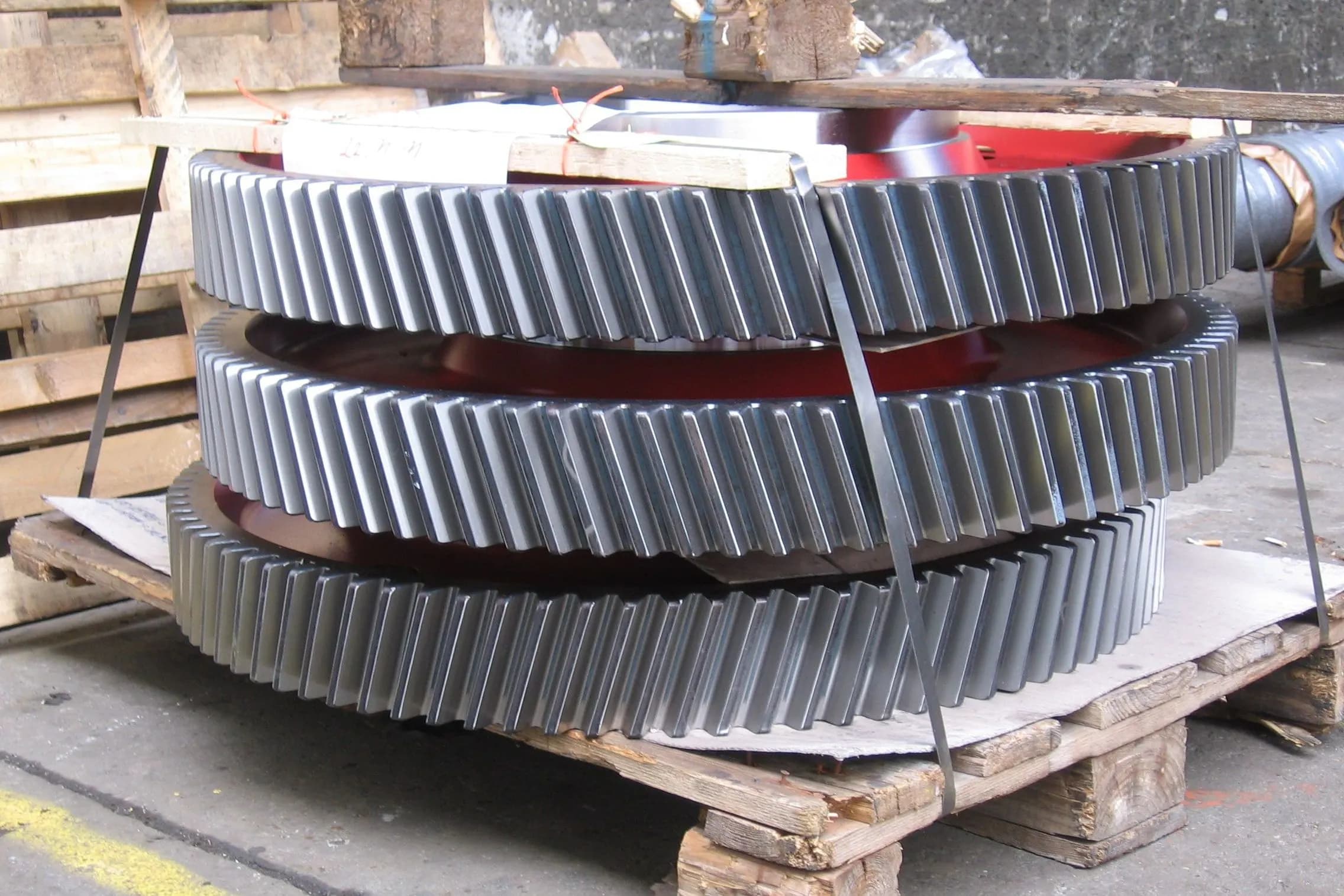
R. Errichello (Power Transmission Engineering, 08/2023) contrasts the two: in full-film conditions, journal-bearing friction rises with speed while gear friction keeps falling.
| Plain bearing | Gear tooth | |
|---|---|---|
| Pressure | ~5 MPa | ~2,000 MPa |
| Film | ~50 µm | ~0.5 µm |
| Regime | Hydrodynamic | EHL |
05
Inside an engine
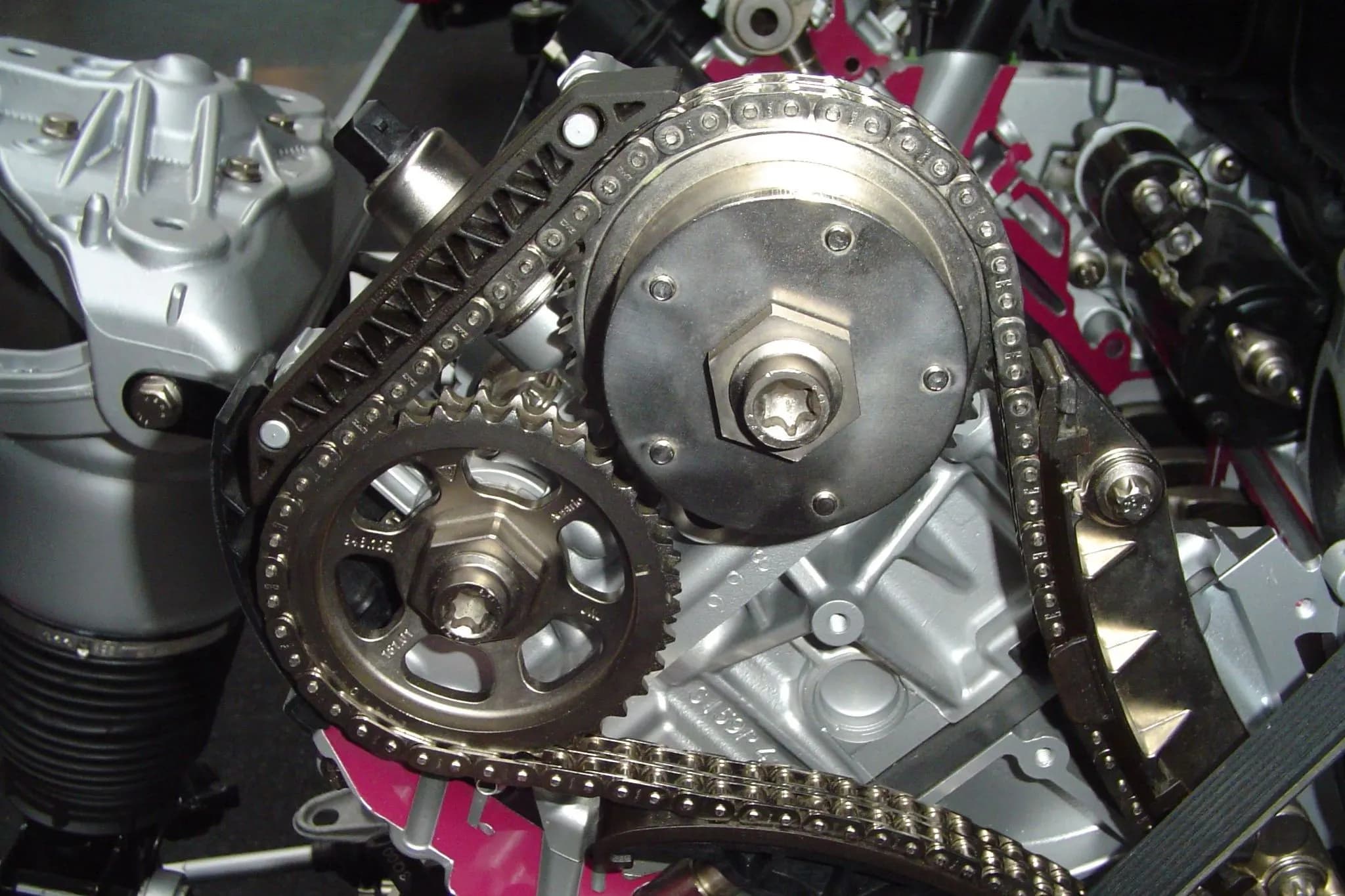
According to NHRA/Total Seal material (29/3/2020), crank bearings run hydrodynamic, flat-tappet cams run boundary and roller followers run mixed; piston rings near top dead centre on compression see the highest load at the lowest speed. Noria cites suggestions that up to 70 % of wear happens at start-up and shutdown - an often-quoted estimate, not a measurement.
06
Where additives take over
Additives make up 0.1-30 % of an oil (STLE). Anti-wear additives such as - first patented in 1941 - form sacrificial films; friction modifiers matter most in the boundary regime.
Boundary helpers
- additive share of oil volume
- 0.1-30 %additive share of oil volume
- first ZDDP patent (US 2,261,047)
- 1941first ZDDP patent (US 2,261,047)
Source: STLE; STLE TLT (09/2019)
07
What it means for choosing oil
- Use the viscosity grade in your manual - thicker is not automatically better.
- Short trips and cold starts keep engines in boundary and mixed regimes: follow severe-service intervals.
- Read the API/ACEA/JASO line, not just the viscosity. See [standards](/en/technical/standards).
- Produced by
- Ung Vuong editorial team
- Content
- Ung Vuong editorial team
- Design
- Ưng Vương Web
Products in this article
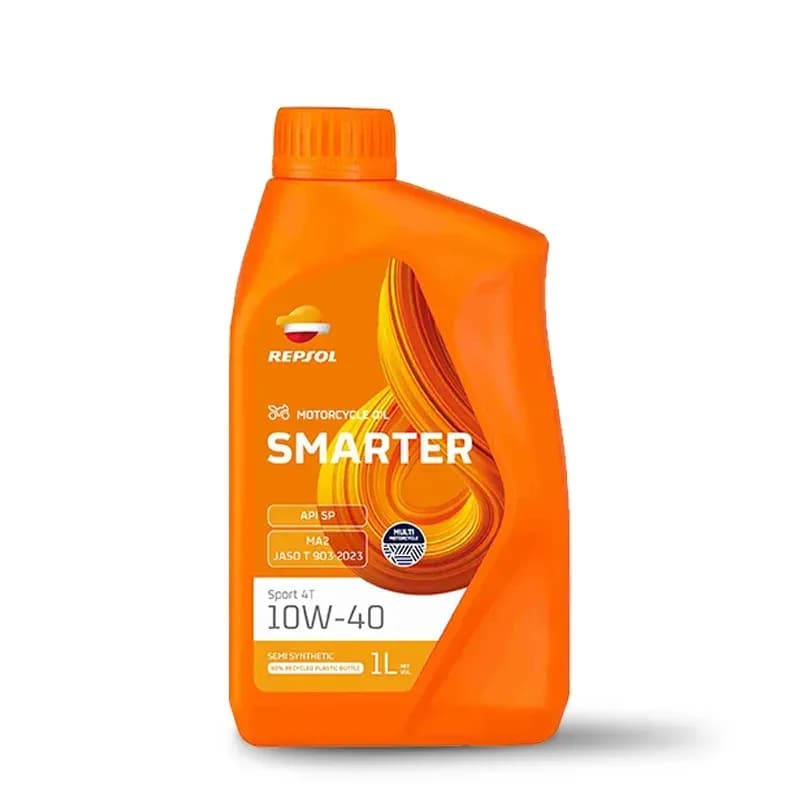
 Manual motorcyclesTDS
 Cars