LONGFORM
Timing chains, belts and wet belts: where oil fits
Why timing chains “stretch”, what the Sequence X test measures, and why oil matters for chains, dry belts and oil-bathed belts.
By: Ung Vuong editorial teamPublished 14 Nov 202613 min read
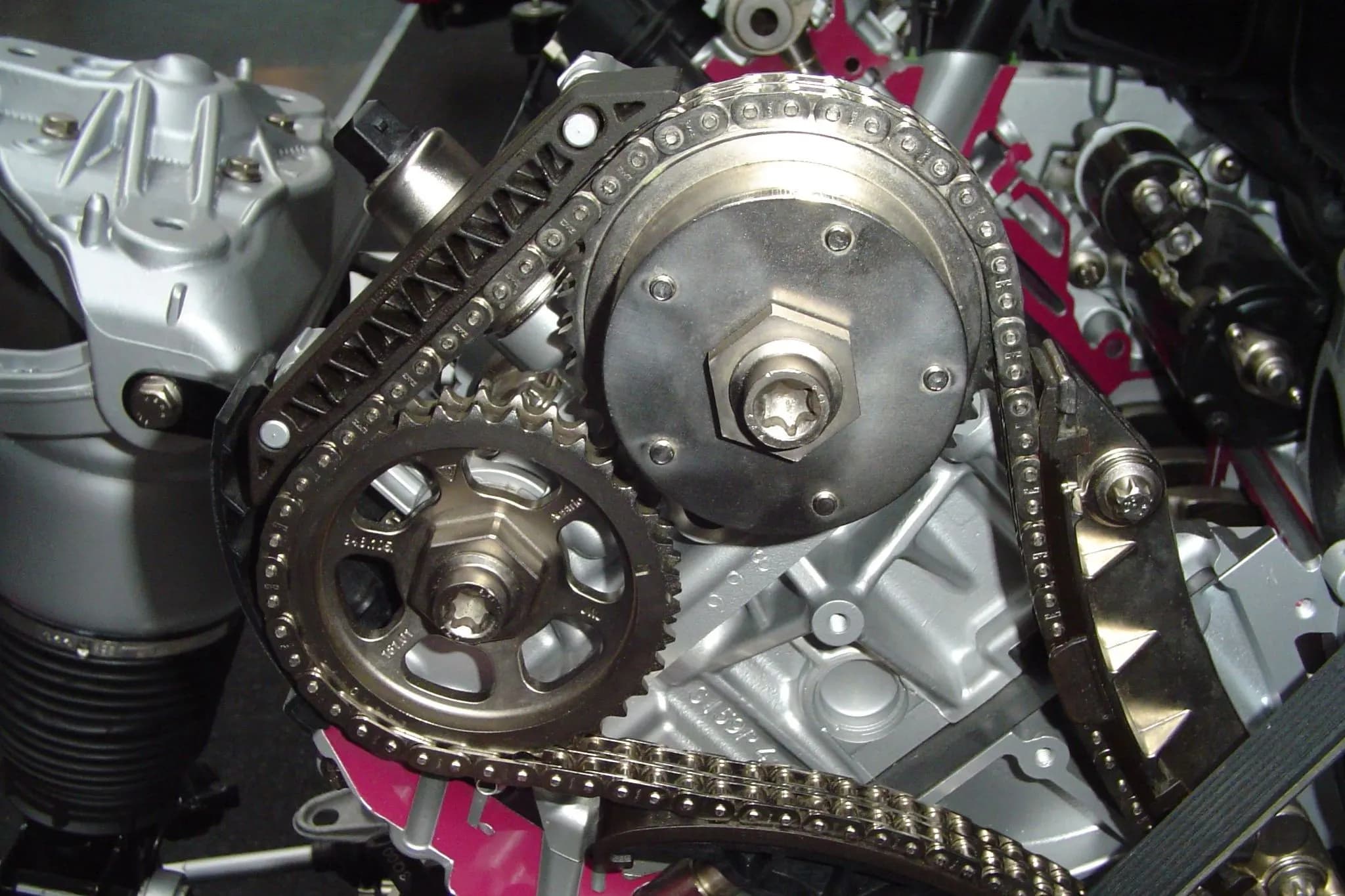
Crankshaft and camshaft must turn in exact sync. Early timing-chain wear in turbocharged direct-injection petrol engines became common enough that API, ILSAC and ACEA now include an engine test for it.
01
Three ways to drive the cams
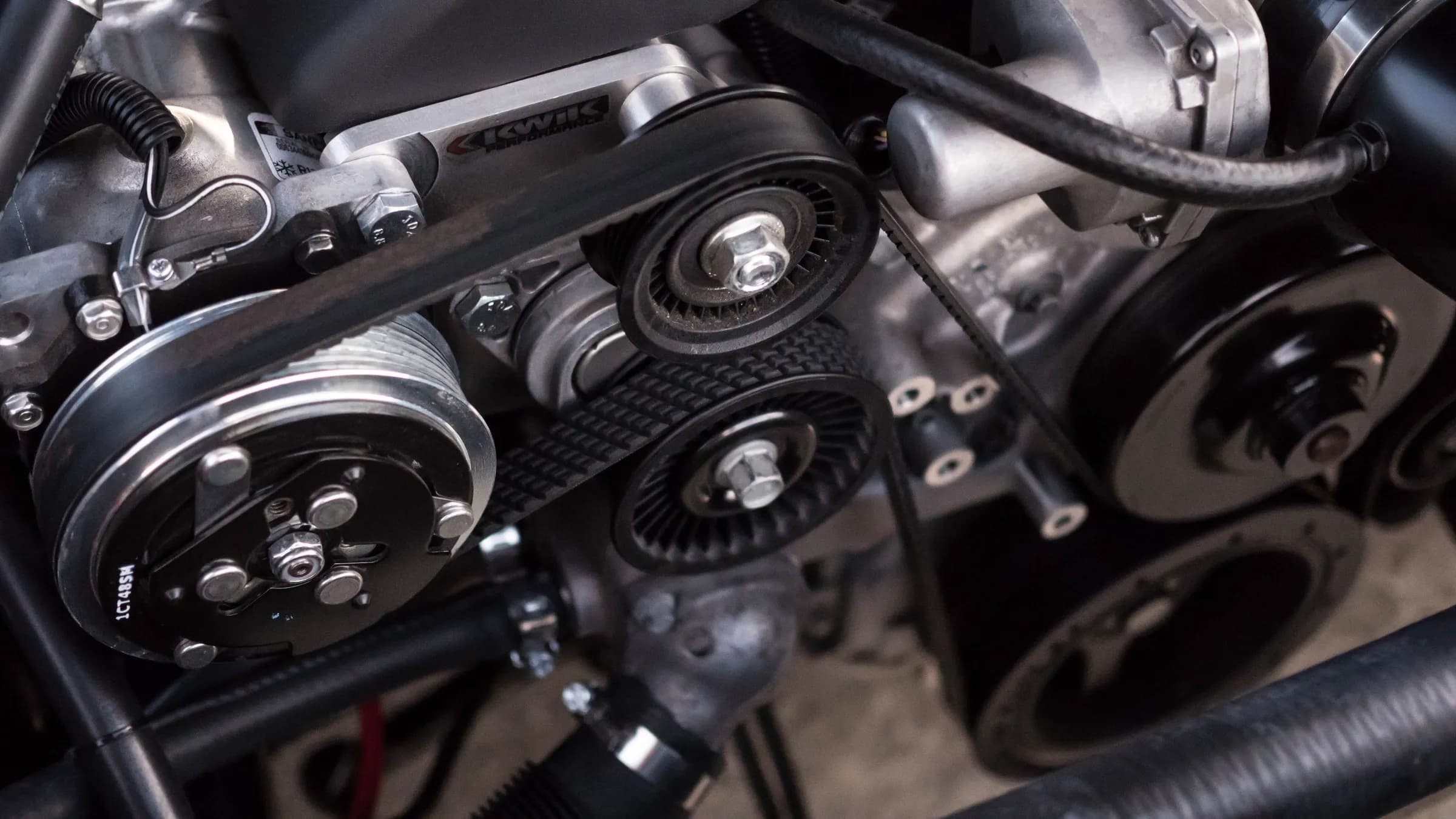
Gears suit engines with the cam close to the crank; rubber toothed belts are cheap and quiet but need scheduled replacement; chains became more common from the 1990s because they need none. Since 2008 a few engines have used oil-bathed “wet” belts, credited with about 30 % lower friction losses and about 1 % lower fuel consumption.
- 1954
Devin-Panhard - first known car with a timing belt.
- 1962
Glas 1004 - first mass-produced car with one.
- 1990s
Chains become more common.
- 2008
First wet belts appear.
| Drive | Strength | Watch out |
|---|---|---|
| Dry belt | Cheap, quiet | Scheduled replacement |
| Wet belt | Low friction | Life depends on correct oil |
| Chain | No fixed interval | Wear harder to predict |
02
Chains wear, they don't stretch
A chain lengthens because pins and link holes wear. A 2016 STLE presentation (Esche et al.) reported higher-than-normal chain wear in T-GDI engines, with soot and acidic combustion by-products suspected. On their bench test (93 °C, 0.15 % carbon black, 6,500 rpm, 1,000 N, 100 h) a low-phosphorus oil (229 ppm) wore much less than oils at 677 and 718 ppm; zinc appeared to promote wear and molybdenum to suppress it.
A chain does not stretch like rubber - hundreds of tiny joints wear together.
03
Sequence X
ASTM D8279 (D8279-25, July 2025) runs 216 hours. SwRI describes a 2012 Ford 2.0L EcoBoost with direct injection, turbo and cam phasers; ring gaps are opened to give about 70 L/min blow-by, and phase 1 runs rich (λ = 0.78). The pass limit for API SP / ILSAC GF-6 is ≤ 0.085 % chain elongation.
Sequence X in four numbers
- 01216 htest length
- 02λ = 0.78rich phase 1
- 03~70 L/minblow-by
- 04≤ 0.085 %max elongation (SP/GF-6)
Source: SwRI Sequence X fact sheet; ASTM D8279-25 (07/2025)
04
In the specifications
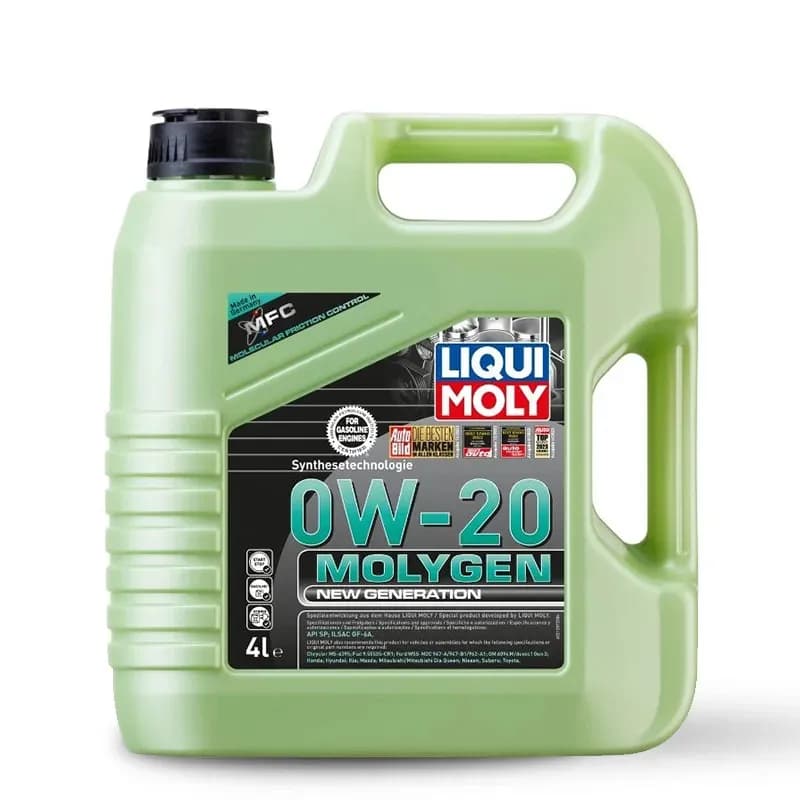
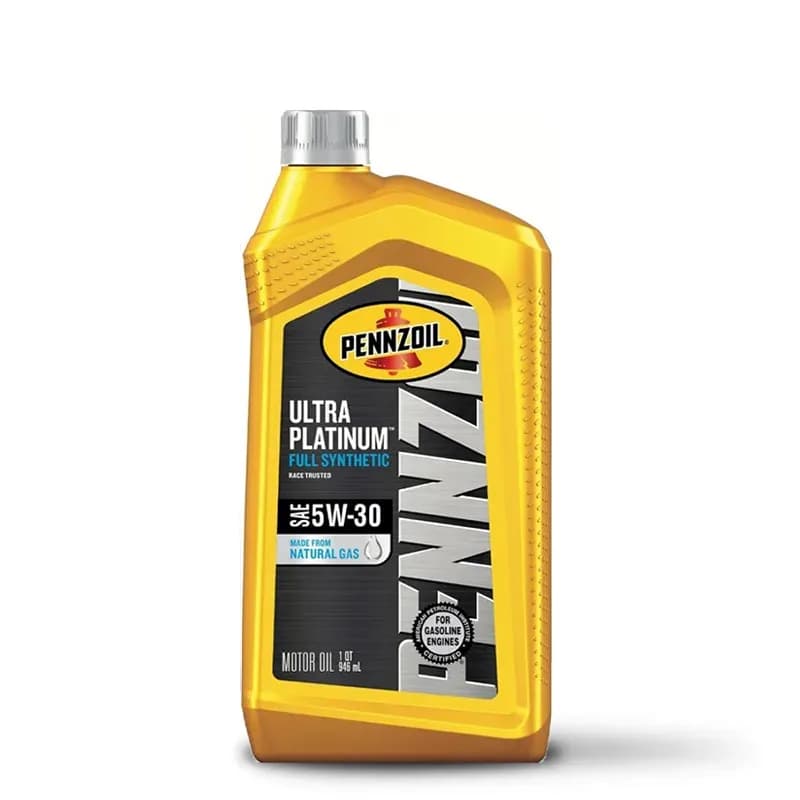
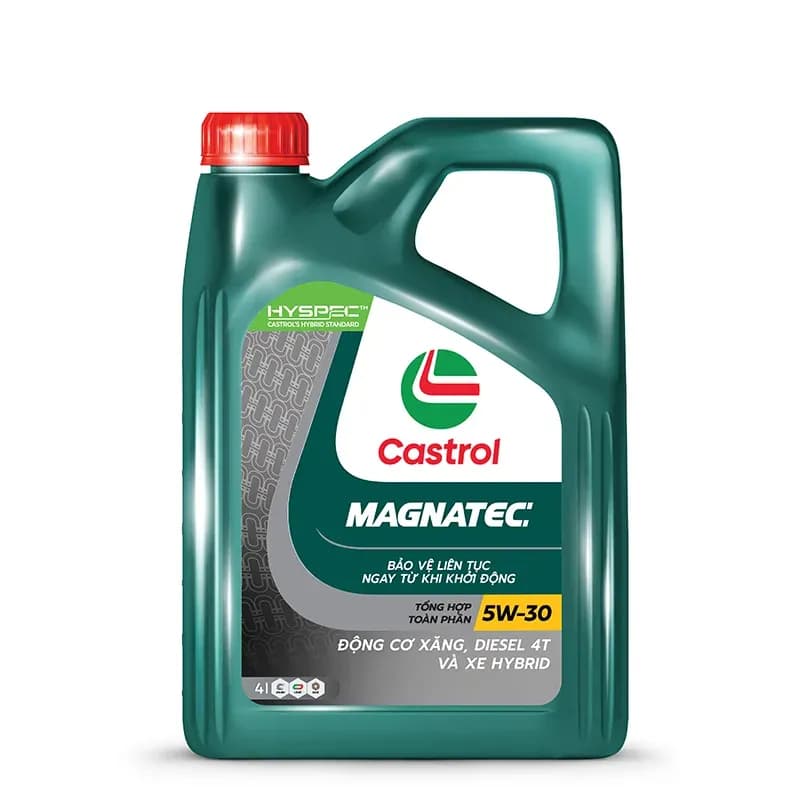
API SP (May 2020) targets and timing chain wear. Per Infineum, API SQ / GF-7 tightens the limit to 0.080 % (0.085 % for 0W-8 and 0W-12). ACEA 2023 applies ≤ 0.085 % to A7/B7, C6 and C7. In our range, Liqui Moly New Generation 0W-20 and Pennzoil Ultra Platinum 5W-30 list API SQ, GF-7A; Castrol Magnatec 5W-30 lists API SP, GF-6A.
05
Wet belts
Ford's 1.0L EcoBoost (production from April 2012) uses an oil-bathed belt; Wikipedia notes premature degradation can cause loss of oil pressure or timing, a 2024 US recall, and an NHTSA investigation opened in December 2025. Use the exact oil specification in your manual.
06
What to do
- Check whether your engine has a chain, dry belt or wet belt.
- Use the grade and specification required.
- Change oil on time - see the [reminder](/en/tools/oil-change-reminder).
- Have a start-up rattle or check-engine light diagnosed.
- Produced by
- Ung Vuong editorial team
- Content
- Ung Vuong editorial team
- Design
- Ưng Vương Web
Products in this article
 Cars
 Cars
 CarsTDS
 CarsTDS