LONGFORM
Hybrids and engine oil: when the engine runs in bursts
A hybrid's petrol engine stops and starts constantly and rarely gets fully hot. What that means for its oil, and how to choose it.
By: Ung Vuong editorial teamPublished 13 Nov 202613 min read
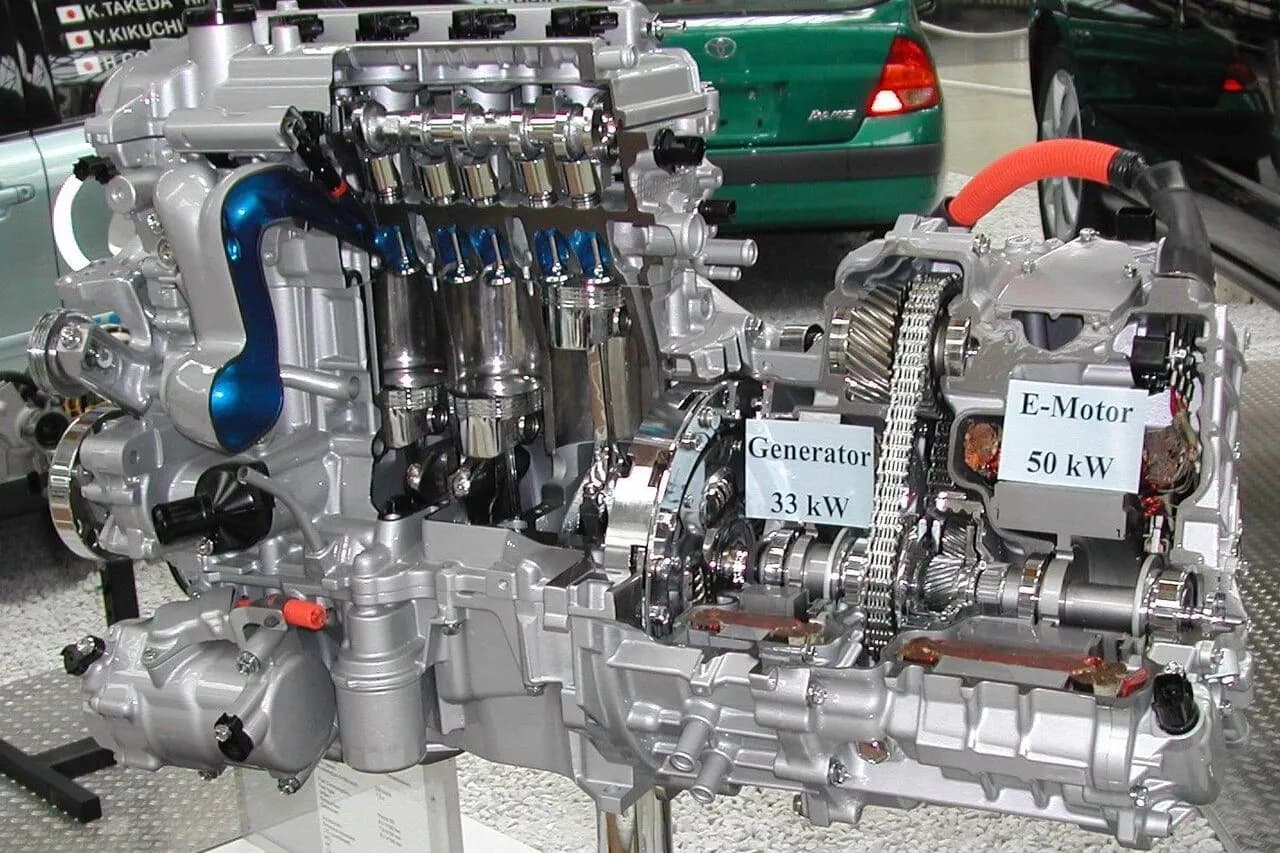
A hybrid car in town can cover a congested stretch with its petrol engine barely running. The electric motor moves the car at light load; the engine wakes only when more power is needed or the battery needs charge, then stops again. For the driver that means quiet and low fuel use. For the oil it means a very different working life from a combustion-only car.
01
An engine that no longer runs continuously
In a combustion-only car the engine runs from departure to switch-off. After a few minutes coolant and oil reach working temperature, and water and fuel vapour condensed in the crankcase are driven out through the ventilation system. A hybrid breaks that familiar cycle: the engine may run for tens of seconds, stop for minutes, then restart - again and again over a trip.
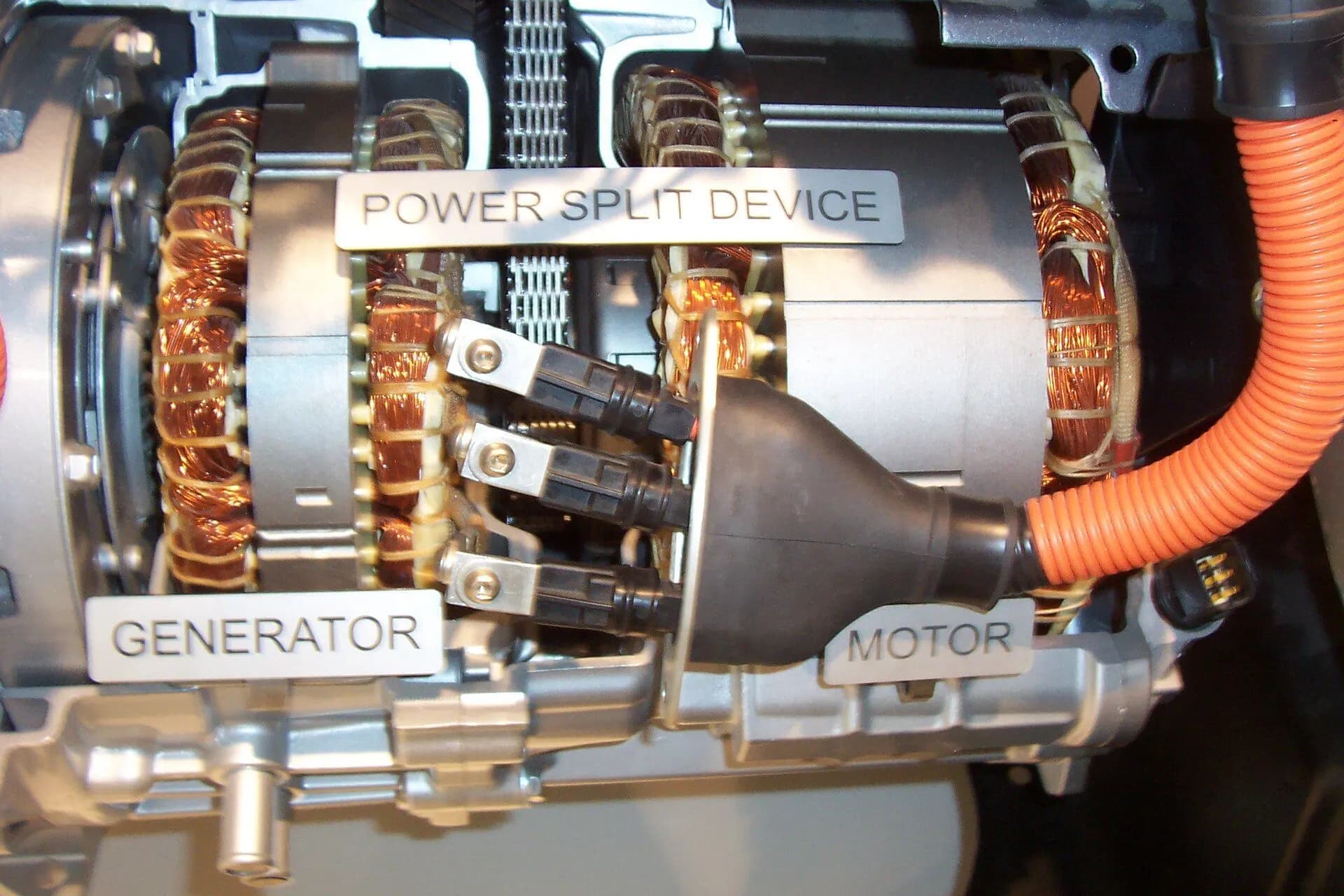
The first consequence is temperature. In simulated WLTC tests, Infineum found hybrid engine oil running 20 to 40 °C cooler than in combustion-only cars, where oil typically exceeds 100 °C by the end of the cycle's second part. On the road, across many short trips, a hybrid's oil can stay cool for days.
For the oil, a hybrid is a string of short engine runs - and very few full warm-ups.
02
Water and fuel in the crankcase
Every litre of petrol burned produces water vapour. While cylinder walls and crankcase are cold, some of it condenses into the oil. Unburned fuel also slips past the rings into the sump, especially in the first seconds after start-up. In a car that runs for long, hot oil drives them off; in a hybrid with short runs, they can build up.
Infineum reports that water and unburned fuel can each exceed 10 % in a hybrid crankcase, forming emulsions with the oil. Separated water can cause rust and corrosion; in prolonged sub-zero conditions it can freeze around the oil pick-up and starve the engine at start-up.
Numbers from the lab and the road
- cooler hybrid oil than in combustion-only cars (simulated WLTC)
- 20-40 °Ccooler hybrid oil than in combustion-only cars (simulated WLTC)
- water or unburned fuel that can build up in the crankcase
- > 10 %water or unburned fuel that can build up in the crankcase
- peak fuel dilution in PHEVs at −30 to −20 °C over < 5,000 km
- 20 % m/mpeak fuel dilution in PHEVs at −30 to −20 °C over < 5,000 km
- stable level as temperatures rose towards 30 °C
- 3-5 % m/mstable level as temperatures rose towards 30 °C
Source: Infineum Insight, Sep 2021 and May 2025
Infineum's road trial with 16 new PHEVs in Heihe, China, found water accumulated continuously only when oil was below 10 °C and coolant below 40 °C; most of the time water stayed under 2,000 ppm. Fuel was the bigger issue: dilution reached 20 % by mass at −30 to −20 °C over short distances, then fell and stabilised around 3-5 % as temperatures rose towards 30 °C.

In a hot climate like Vietnam's, conditions for continuous water build-up (oil below 10 °C) are rare. But high humidity, short trips and heavy traffic are still conditions many manuals class as severe service. Regular checks and on-time oil changes matter as much as for any engine.
03
High-power cold starts
A characteristic hybrid event is the high-power cold start: the engine is cold but is called on to deliver a lot of power at once, for example when the driver floors the pedal to overtake or climb. Infineum describes these as sudden high loads on the engine that can cause particle spikes, especially below 23 nm.
Every time a hybrid engine fires, the oil film has to form at once - even with a cold engine.
04
Ever thinner oils: 0W-20, 0W-16, 0W-8
To cut friction and fuel use, carmakers - Japanese ones in particular - have moved towards very thin oils. SAE J300 now has hot grades 16, 12 and 8 alongside the familiar 20, 30 and 40. Each hot grade is a kinematic viscosity range at 100 °C with a minimum viscosity at 150 °C: SAE 8 is 4.0 to under 6.1 mm²/s (HTHS ≥ 1.7 mPa·s), SAE 12 is 5.0 to under 7.1 (≥ 2.0), SAE 16 is 6.1 to under 8.2 (≥ 2.3), SAE 20 is 6.9 to under 9.3 (≥ 2.6).
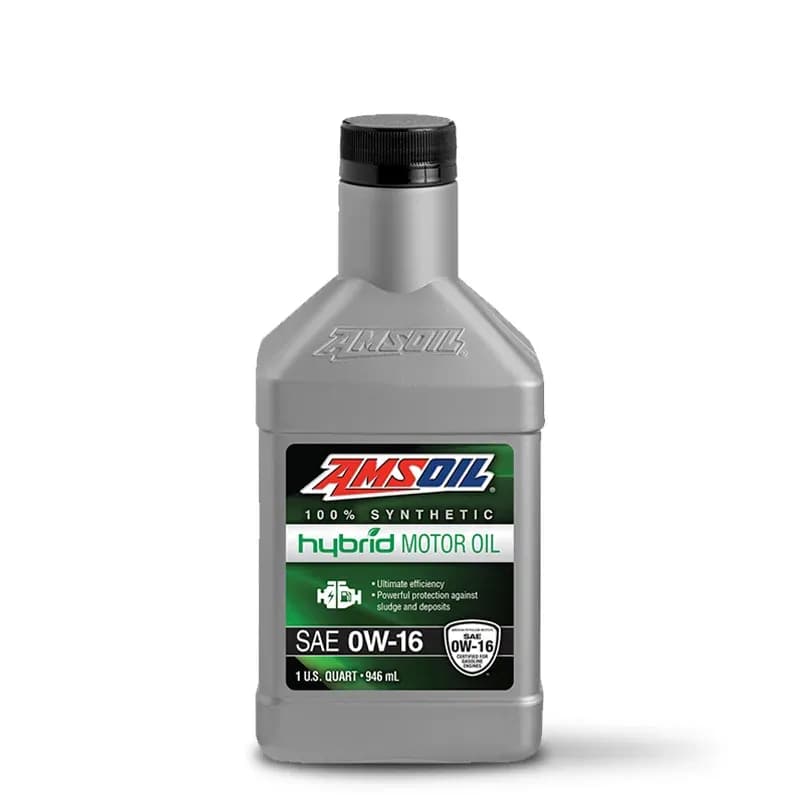
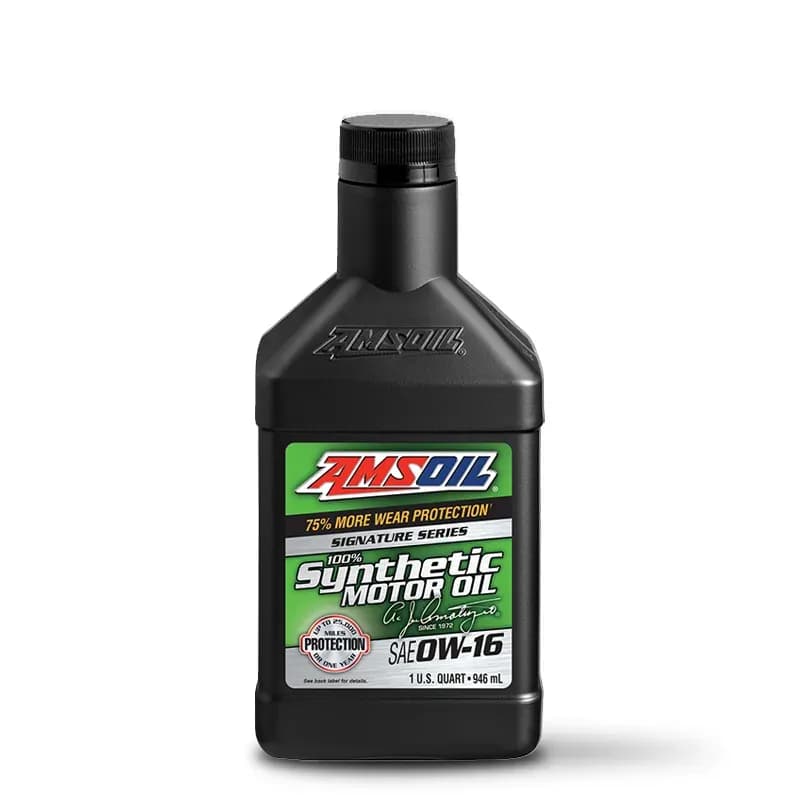
A concrete example: the Japanese Toyota Corolla Cross HEV manual (from 07/2026) lists 0W-16 meeting API SP/RC and ILSAC GF-6B as the recommended oil for the 1.8 L 2ZR-FXE engine; if 0W-16 is hard to find, 0W-20 or 5W-30 may be used. For the 2.0 L M20A-FXS engine, the factory fill is 0W-8 meeting JASO GLV-1.
Example from a hybrid owner's manual
- 010W-16recommended oil for the 2ZR-FXE engine (API SP/RC, ILSAC GF-6B)
- 020W-8factory fill for the M20A-FXS (JASO GLV-1)
- 033.9 / 4.2 Loil change capacity: oil only / with filter
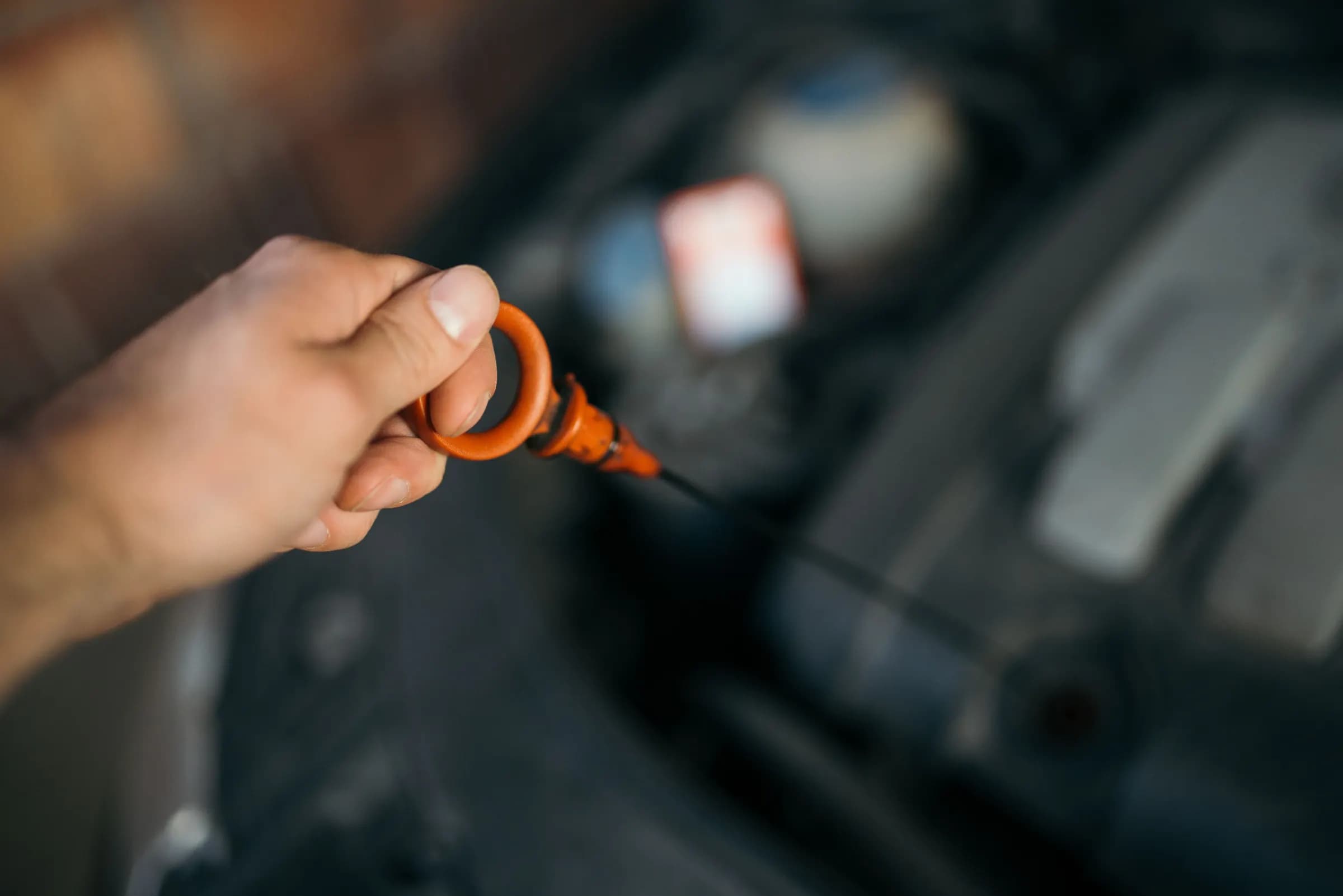
- 04≥ 5 minwait after switching off the hybrid system before reading the dipstick
Source: Toyota Corolla Cross HEV manual (Japanese edition, 07/2026)
05
Reading the label: API, ILSAC and viscosity
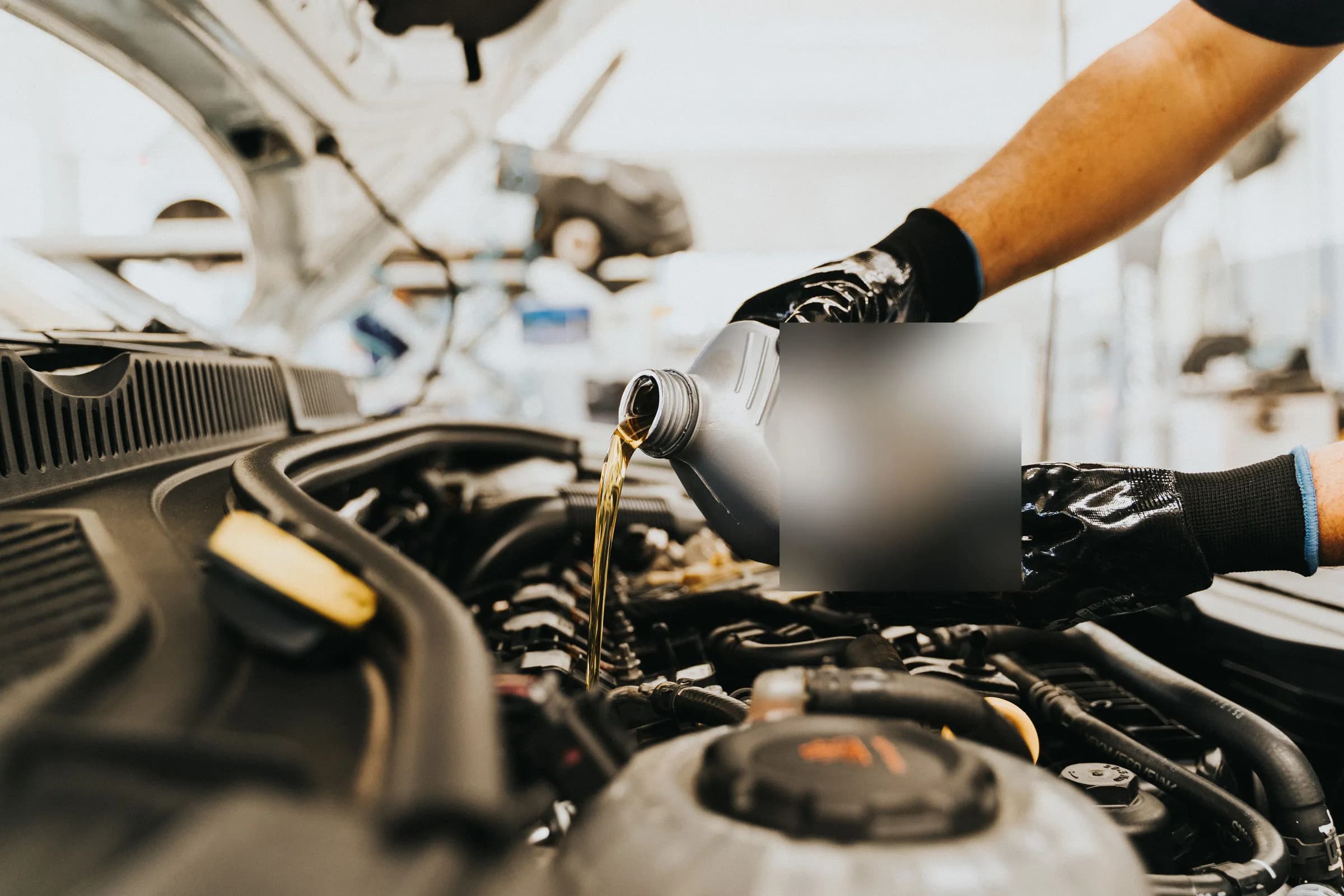
Hybrid manuals usually state two things: the SAE viscosity grade and a quality standard - in the example above, API SP/RC and ILSAC GF-6A/GF-6B. Since 31 March 2025 API has licensed the newer API SQ, with the matching ILSAC GF-7: GF-7A for common grades (starburst mark) and GF-7B for 0W-16 only (shield mark).
06
Oil changes: by distance or by time?
A hybrid can cover many kilometres with few petrol-engine hours. That makes the time limit in the manual all the more important: oil still ages, absorbs moisture and picks up fuel even if the odometer climbs slowly. Most carmakers say change by distance or time, whichever comes first.

07
Additives for a new duty cycle
Additive makers have started building hybrid-specific formulations. Infineum created a Hybrid Test Protocol because few industry tests reflect these challenges. In a 15,000 km road trial of 16 vehicles in Heihe, China, with winter lows of −40 °C, bespoke hybrid formulations gave better piston cleanliness than an ILSAC GF-6 reference oil.


08
Five things to remember
- Read the manual: the viscosity grade (e.g. 0W-16, 0W-20) and the standard (API, ILSAC, JASO GLV) are both required.
- Don't switch to a thicker oil because of the heat - use an alternative grade only if the manual allows it.
- Change by distance or time, whichever comes first; check the severe-service schedule if the car mostly drives in town.
- Check the level using the maker's procedure (warm engine, system off, wait).
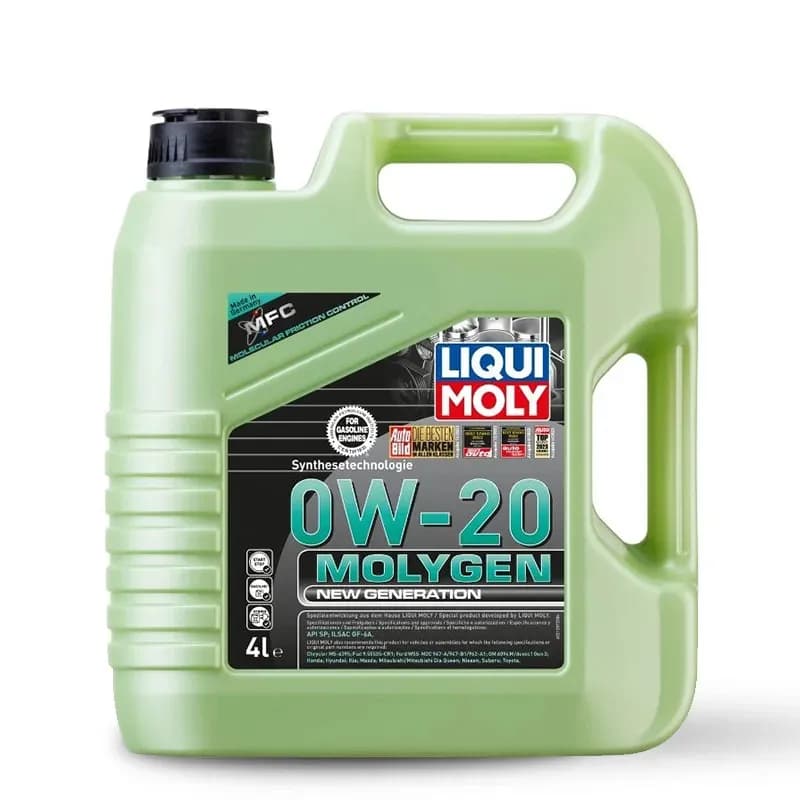
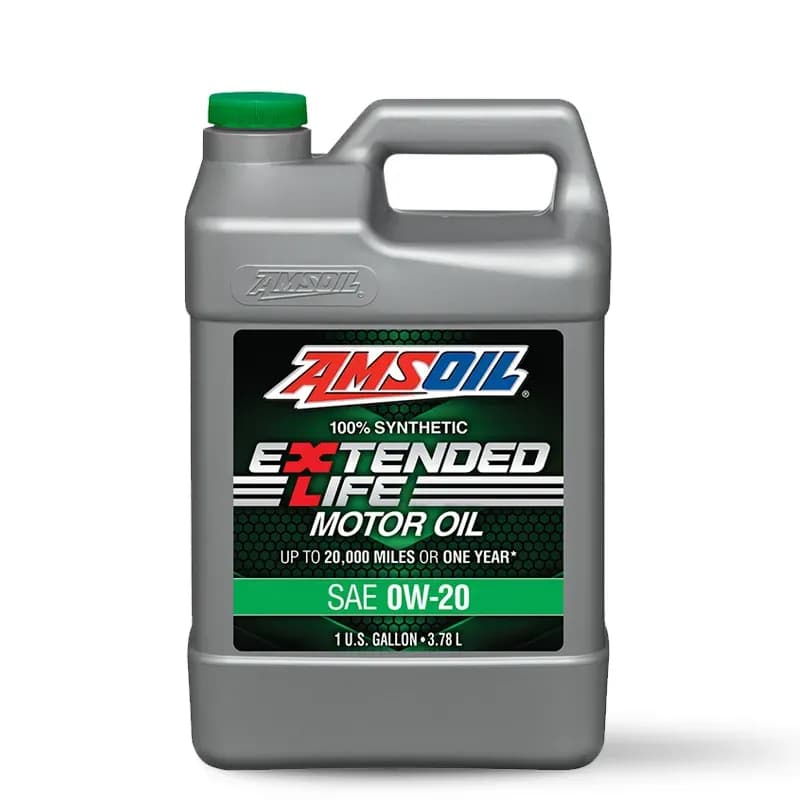
- Distinguish official approval, meets requirements and recommended on product documents.
A hybrid doesn't need a “magic” oil. It needs the oil its maker specified, changed on time and checked properly. Not sure what your car needs? Send us a photo of the manual page via Contact.
A marketing label is no substitute for the standard printed on the bottle.
- Produced by
- Ung Vuong editorial team
- Content
- Ung Vuong editorial team
- Design
- Ưng Vương Web
Products in this article
 Cars
 Cars
 Cars
 Cars