LONGFORM
MotoGP 2027: 850 cc engines and 100 % non-fossil fuel
From 2027 MotoGP drops from 1,000 to 850 cc, bans ride-height devices and moves to fully non-fossil fuel. The announced numbers - and what they mean for your bike.
By: Ung Vuong editorial teamPublished 14 Nov 202612 min read
The biggest technical reset in MotoGP for nearly two decades arrives in 2027. The Grand Prix Commission finalised the main points at Jerez in early May 2024, and Crash.net, Motorsport.com and Autosport published the details on 6 May 2024.
01
Smaller engines
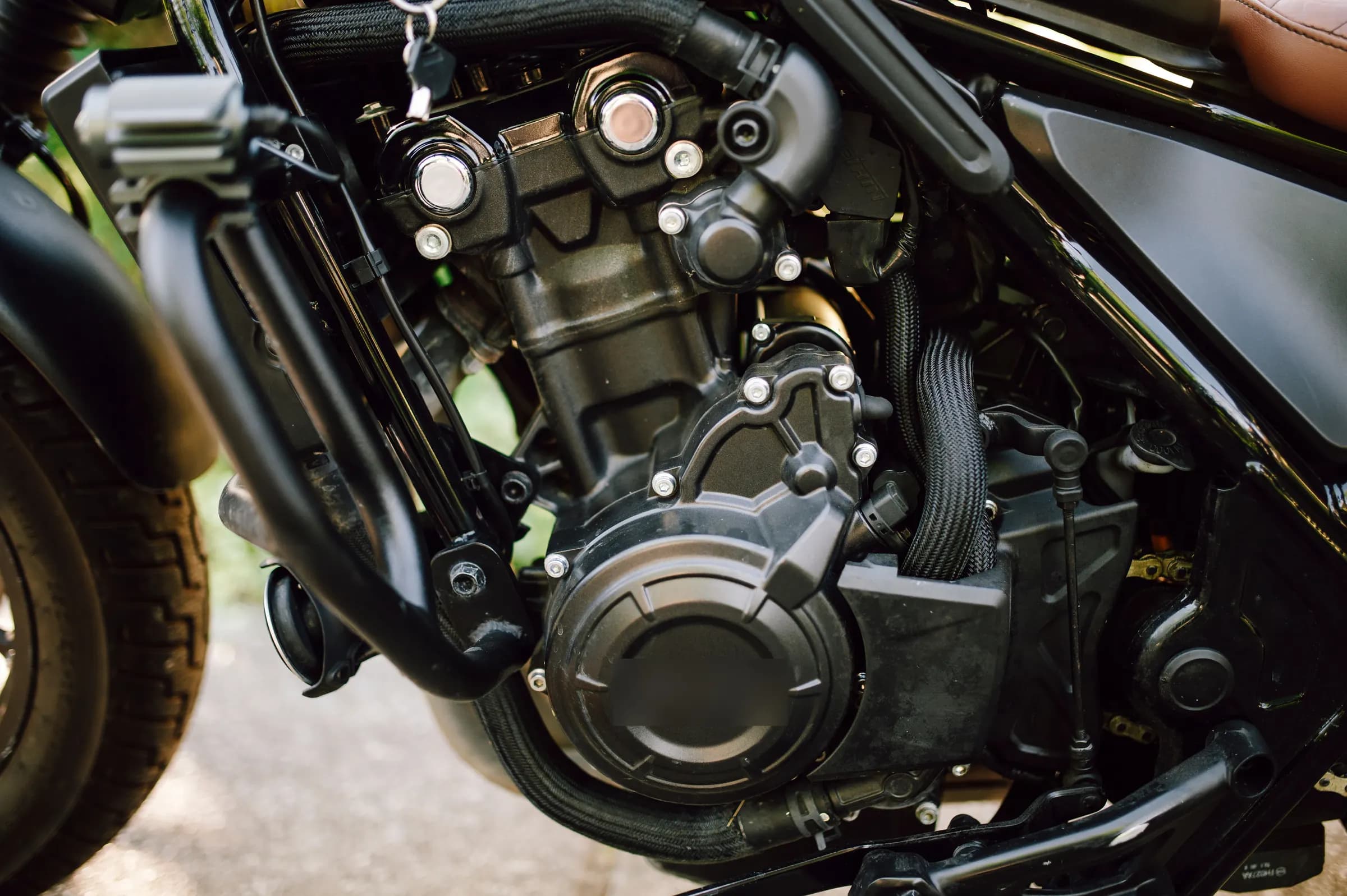
Maximum capacity falls from 1,000 cc to 850 cc - the first downsizing since 2007 - and maximum bore from 81 mm to 75 mm. Engines remain four-stroke four-cylinders. motogp.com (2 June 2025) says the change lowers top speed for safety, improves fuel mileage and makes engines more relevant to road bikes. Each rider gets 6 engines for up to 20 races, 7 for 21-22 races.
MotoGP engines from 2027 - as announced
- 01850 ccmax capacity, down from 1,000 cc
- 0275 mmmax bore, down from 81 mm
- 036 - 7engines per rider per season
- 0420 LGrand Prix fuel tank, down from 22 L
Source: Crash.net, Motorsport.com, Autosport (6/5/2024)
02
Less fuel, and no fossil fuel
The race tank shrinks to 20 L (Sprint: 11 L). The roadmap announced on 24 November 2021 required at least 40 % non-fossil content in all classes from 2024 and 100 % from 2027, made from carbon capture, municipal waste or non-food biomass. TotalEnergies' 2024-2026 Yamaha deal (27 June 2024) refers to technical regulation 2.4.5.1, titled “Fuel and Oil”.
- 2021
Fuel roadmap: 40 % non-fossil by 2024, 100 % by 2027.
- 2024
May: 2027 technical rules agreed.
- 2025
Pirelli named tyre supplier from 2027 (6/3); Liberty Media completes acquisition (3/7).
- 2026
30/4: MotoGP wildcards banned from 2027.
- 2027
First season of 850 cc and 100 % non-fossil fuel (as announced).
In MotoGP's rulebook, fuel and lubricant share one technical article.
03
Chassis and aero
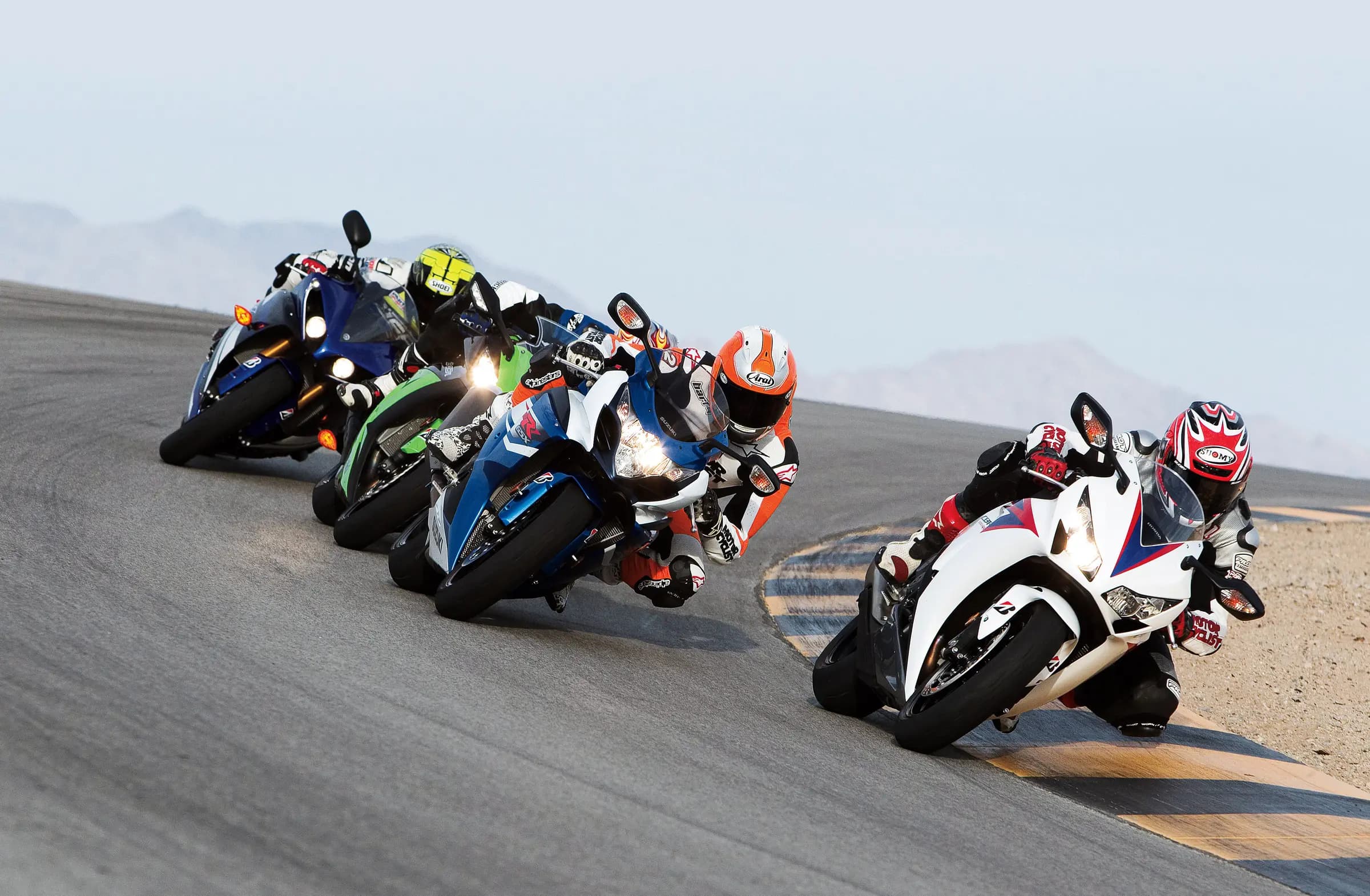
All ride-height devices, including holeshot devices, are banned. The upper front fairing narrows from 600 to 550 mm, the nose moves back 50 mm, the rear maximum height drops from 1,250 to 1,150 mm and minimum weight from 157 to 153 kg.
| Item | Before 2027 | From 2027 |
|---|---|---|
| Capacity | 1,000 cc | 850 cc |
| Bore | 81 mm | 75 mm |
| Fuel tank | 22 L | 20 L |
| Fuel | ≥ 40 % non-fossil | 100 % non-fossil |
| Minimum weight | 157 kg | 153 kg |
04
Concessions and wildcards
Existing manufacturers start 2027 in Rank B with engine development frozen; newcomers start in Rank D. On 30 April 2026 the Grand Prix Commission banned MotoGP wildcards from 2027, and 2026 wildcards could not use 850 cc bikes.
05
Where engine oil fits
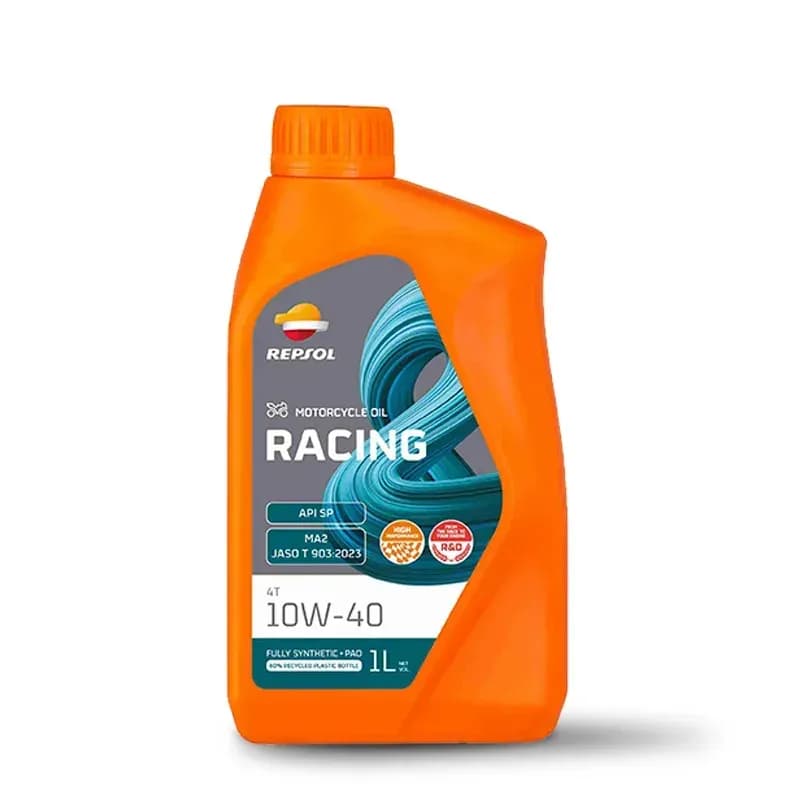
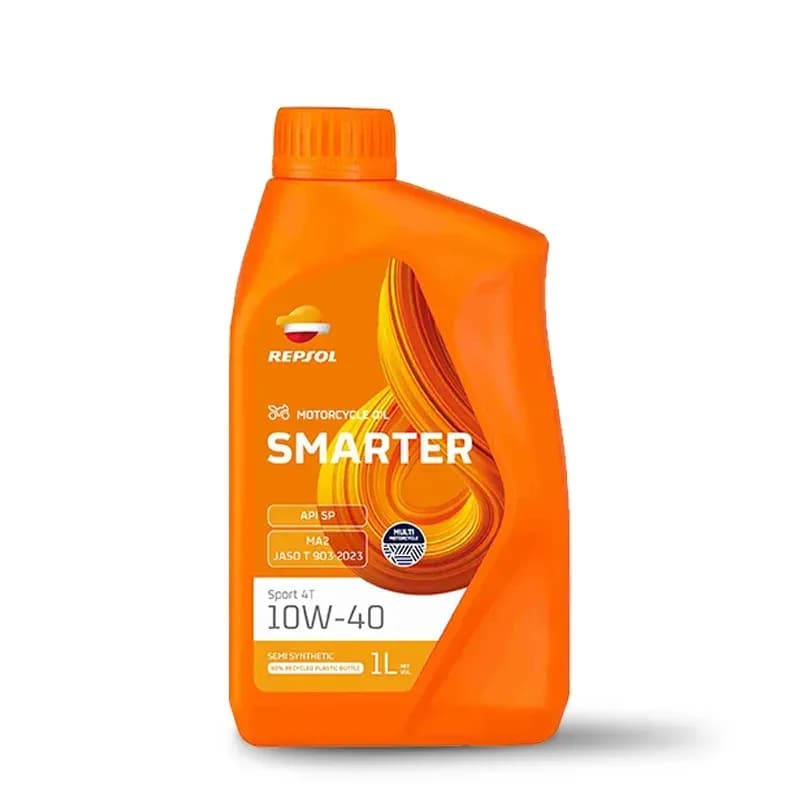
No official source we read links the 850 cc rule or the new fuel to a specific lubricant requirement. What carries over to road bikes is the trend - smaller, more efficient engines and cleaner fuels - and, for bikes with wet clutches, JASO MA/MA1/MA2 under JASO T903:2023. Read the label, not the racing slogan: for example Repsol Racing 4T 10W-40 or Mobil 1 Racing 4T 10W-40, and the label guide.
- The 2027 rules cover engine, fuel, chassis and aero - not road-bike oil.
- Wet-clutch bikes: look for JASO MA/MA1/MA2 and the manual's viscosity.
- Dry-clutch scooters: usually JASO MB.
- Produced by
- Ung Vuong editorial team
- Content
- Ung Vuong editorial team
- Design
- Ưng Vương Web
Products in this article
 Manual motorcyclesTDS
- Mobil 1 Racing 4T 10W‑40Image coming soon
 Clutch & big bikesTDS
Mobil 1 Racing 4T 10W‑40
- SAE 10W-40
- API SN
- +1
- +2
 Manual motorcyclesTDS