
Maintenance guides · technical report
Oil change intervals for long-haul trucks: what workshops should know
Normal vs severe service, fuel, engine hours and used oil analysis - how to set an oil change interval on solid evidence.
Ung Vuong editorial teamPublished 24 Oct 2026Updated 13 Nov 20264 min read
There is no single correct oil change interval for every truck. It depends on the engine, the oil, the fuel and how the vehicle is used. The engine manufacturer's manual is always the starting point; the workshop's job is to determine which operating conditions the truck actually faces and to monitor it so that any adjustment is evidence-based.
Start from the manual: normal and severe conditions
Most truck makers split their service schedule into two levels. For example, Isuzu's truck warranty and service guide (South African market) states that under severe operating conditions the distance or time between services must be halved - a 20,000 km or 12-month interval becomes 10,000 km or 6 months. Exact figures differ between models, so always check the manual for the vehicle you are servicing.
What counts as severe service?
- Tippers and vehicles serving construction sites, quarries and mines.
- Gravel or dirt roads making up more than 20% of total use (the threshold in Isuzu's guide).
- For medium and heavy trucks, Isuzu's guide also lists compactors, tippers and street sweepers as severe service.
- Beyond the type of work, many manufacturers' manuals also count factors such as long idling, frequent heavy loads and dust - check the definition in that vehicle's own manual.
Trucks in Vietnam often face several factors at once: heat, dust, heavy loads and urban congestion. So don't assume a long-haul truck is in “normal service” - look at the actual route, then compare it with the manufacturer's definition.
Engine hours or kilometres?
For vehicles with an engine-hour meter, Isuzu's guide requires servicing at the specified hours regardless of distance. This matters especially for crane trucks, tankers and vehicles with power take-off (PTO), which can run the engine for many hours while covering few kilometres.
Fuel affects the interval too
According to API 1509, API CK-4 diesel oils are formulated for fuel with up to 500 ppm sulfur, but using fuel above 15 ppm may affect aftertreatment durability and the oil drain interval; in that case, ask the engine manufacturer for the appropriate interval. Fuel of unknown origin is a reason to shorten the interval and monitor more closely.
Used oil analysis
For fleets, sampling oil regularly and sending it to a laboratory allows the interval to be extended or shortened on data rather than guesswork. The value lies in the trend over many samples, not in a single result. Commonly read indicators:
- Sharp viscosity drop: possible fuel dilution (faulty injectors, long idling).
- Viscosity increase: possible soot or oxidation from running too long, or a clogged air filter.
- Deep fall in base number (): the oil can no longer neutralise combustion acids.
- Sudden rise in wear metals (iron, aluminium, copper, lead…): inspect immediately.
- Rising potassium, sodium, boron: a sign of coolant leaking into the oil. Silicon with aluminium and iron: dirt entering through the intake.
References
- Isuzu Motors South Africa - Truck Warranty & Service Guide (Rev 9): Service intervals - normal & severe operating conditions
- API 1509 - Engine Oil Licensing and Certification System, edition 23 (02/2025), section API CK-4
- STLE (TLT, 12/2022) - Used oil analysis fundamentals
- Petro-Canada Lubricants - Lube Source Handbook: Used oil analysis
Author
The content team of Ung Vuong Lubricants. Articles are compiled from brands' technical data sheets (TDS) and the SAE, API, ACEA and JASO standards; every article lists its references at the end.
For reference only - always check your vehicle manufacturer's handbook.
Products in this article
 Trucks
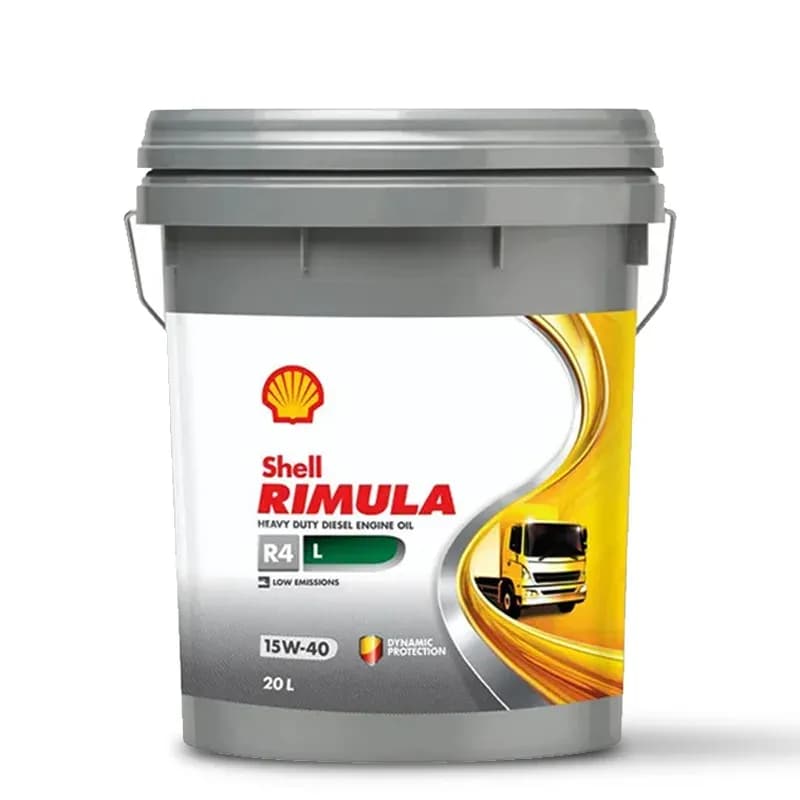
SHELL RIMULA R4 L 15W‑40
- SAE 15W-40
- API CK-4
- +1
- +2
 TrucksTDS
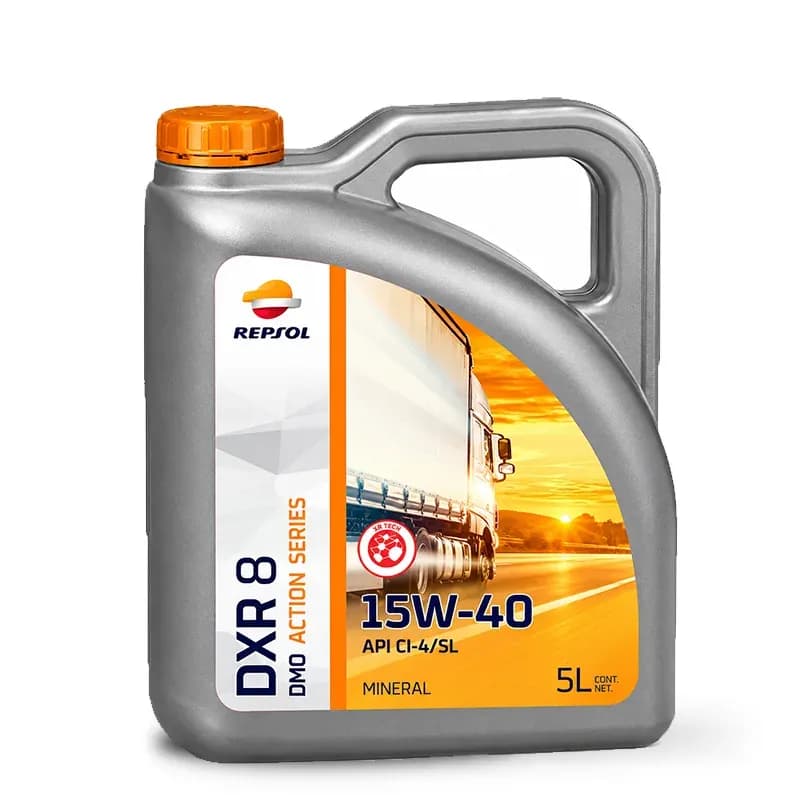
REPSOL DXR 8 SAE 15W‑40
- SAE 15W-40
- API CI-4/SL
- +2
- +3

Read next
More articles
LONGFORMMaintenance guides
Scooter care: final drive oil, drive belt and clutch, by the manual
9 min read

Try it
Open the SAE J300 bench
Pick a grade and see what each number means.