LONGFORM
Low-SAPS oils and DPF/GPF filters: where does ash go?
Ash from oil additives cannot burn and stays in the particulate filter. How to read sulphated ash, phosphorus and sulphur limits in ACEA C and API CK-4.
By: Ung Vuong editorial teamPublished 14 Nov 202613 min read
stands for , phosphorus and sulphur - the ACEA 2023 Oil Sequences define the term in their glossary. All three come largely from useful additives: calcium and magnesium detergents and the anti-wear additive . STLE's TLT (January 2022) notes that API and ACEA chemical limits do not allow higher phosphorus in oils designed to protect three-way catalysts.
01
Filters trap soot; ash stays forever
DPFs and GPFs are wall-flow filters. Soot is carbon and can be burned off during regeneration; ash cannot. DieselNet's guide (A. G. Sappok, rev. 2013.01) says lubricant additives are generally the largest ash source - mainly zinc, calcium and magnesium sulphates, phosphates and oxides. With API CJ-4 oils (≤ 1.0 % sulphated ash), pressure drop roughly doubles after about 4,680 hours (≈ 303,000 km); ash backpressure is estimated to add 2-3 % to fuel consumption.
Ash in diesel particulate filters
- DPF pressure drop after ~4,680 h (≈ 303,000 km) with CJ-4 oil
- ≈ 2×DPF pressure drop after ~4,680 h (≈ 303,000 km) with CJ-4 oil
- ash share of trapped material after 53,000 km
- ≈ 50 %ash share of trapped material after 53,000 km
- ash share after 241,000 km
- > 80 %ash share after 241,000 km
- estimated fuel penalty from ash backpressure
- 2-3 %estimated fuel penalty from ash backpressure
Source: DieselNet - Ash Accumulation in Diesel Particulate Filters (A. G. Sappok, rev. 2013.01)

02
GPFs for petrol engines
AECC (November 2017) reports that GDI cars were about 40 % of new non-diesel EU registrations in 2015 and that their particle emissions were reported above the Euro 6c limit of 6×10¹¹ particles/km, especially on the road. GPFs run hotter than DPFs, so soot burns off more readily - which makes lifetime ash loading a key design factor.
03
ACEA C limits
ACEA 2023 (12/9/2023) calls A/B oils “High SAPS” and C oils “catalyst and GPF/DPF compatible - Low SAPS”, stating that they increase DPF/GPF and TWC life. Most C grades are mid-SAPS; only C4 is truly low-SAPS. Read more about ACEA and HTHS.
| ACEA 2023 | Sulphated ash (%) | Phosphorus (%) | Sulphur (%) | HTHS (mPa·s) |
|---|---|---|---|---|
| A3/B4 | 1.0 - 1.6 | report | report | ≥ 3.5 |
| C2 / C3 | ≤ 0.8 | 0.07 - 0.09 | ≤ 0.3 | ≥ 2.9 / ≥ 3.5 |
| C4 | ≤ 0.5 | ≤ 0.09 | ≤ 0.2 | ≥ 3.5 |
| C5, C6 | ≤ 0.8 | 0.07 - 0.09 | ≤ 0.3 | 2.6 - < 2.9 |
| C7 | ≤ 0.8 | 0.07 - 0.09 | ≤ 0.3 | 2.3 - < 2.6 |
04
API side
Per Infineum's 2025 summary, API CK-4 limits phosphorus to 0.12 %, sulphur to 0.4 % and sulphated ash to 1.0 %; API warns that fuel above 15 ppm sulphur may affect aftertreatment durability. ACEA 2024 heavy-duty E8 and E11 cap ash at 1.0 %. For passenger cars, API SQ-RC/ILSAC GF-7 sets phosphorus at 0.06-0.08 %, ash ≤ 0.9 % and at least 81 % phosphorus retention.
05
Reading the label
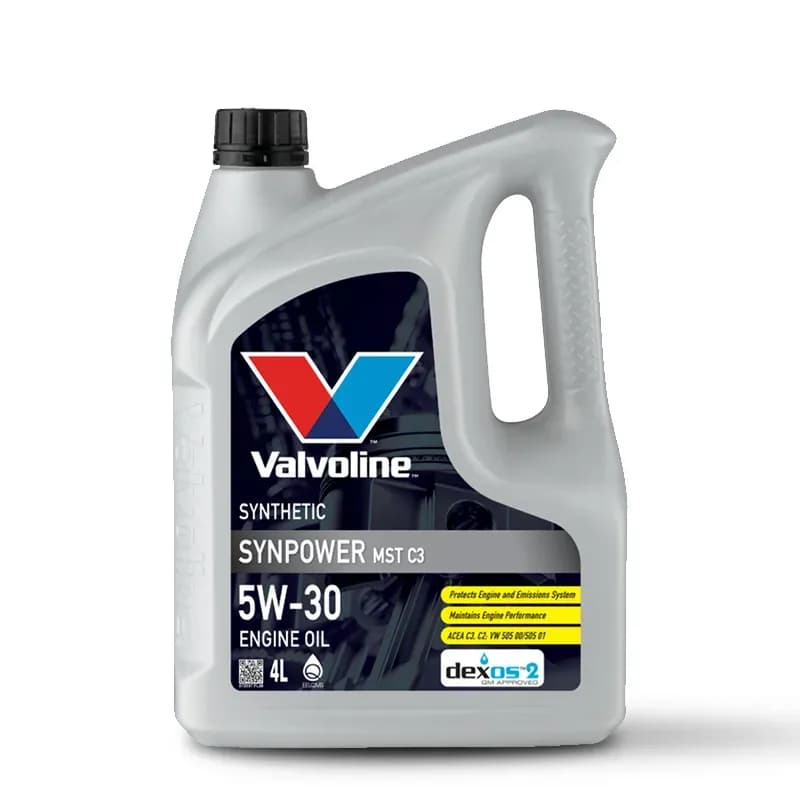
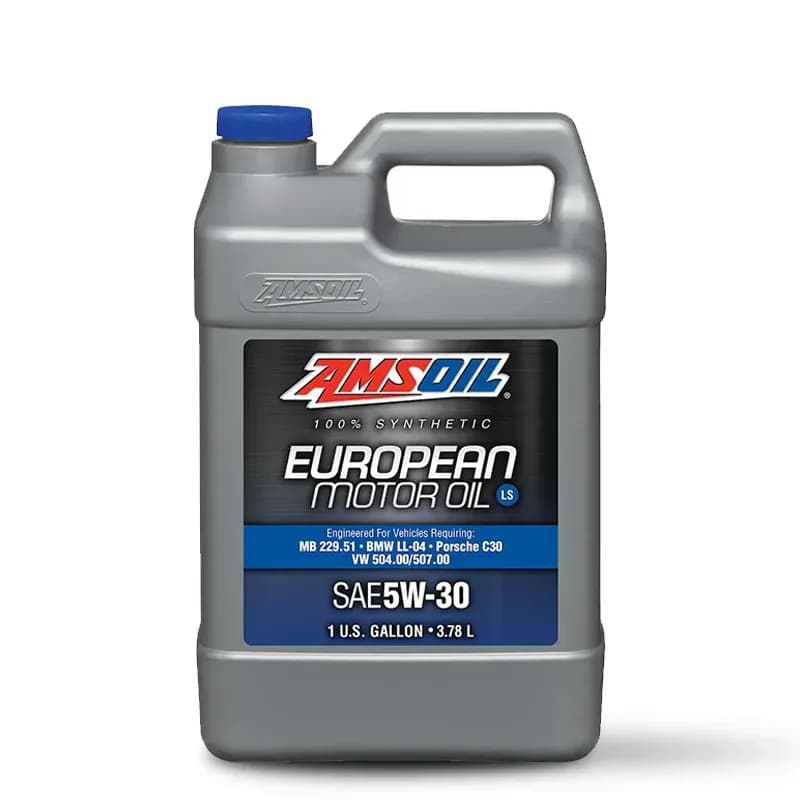
Start with the owner's manual. Mobil 1 ESP 5W-30 (PDS 07-2026) meets ACEA C3 and holds approvals including MB 229.51/229.52, BMW Longlife-04 and VW 504 00/507 00, with typical sulphated ash of 0.8 %. Distinguish an official approval from “meets requirements” and “recommended”, and never drop to a C5/C6 level unless the carmaker allows it.
Low-SAPS oil slows ash build-up; it cannot fix an engine that burns oil.
- Produced by
- Ung Vuong editorial team
- Content
- Ung Vuong editorial team
- Design
- Ưng Vương Web
Products in this article
- Mobil 1 ESP 5W‑30Image coming soon
 CarsTDS
Mobil 1 ESP 5W‑30
- SAE 5W-30
- API SP/SN PLUS
- +1
- +2
 Cars
 Cars
 Cars